

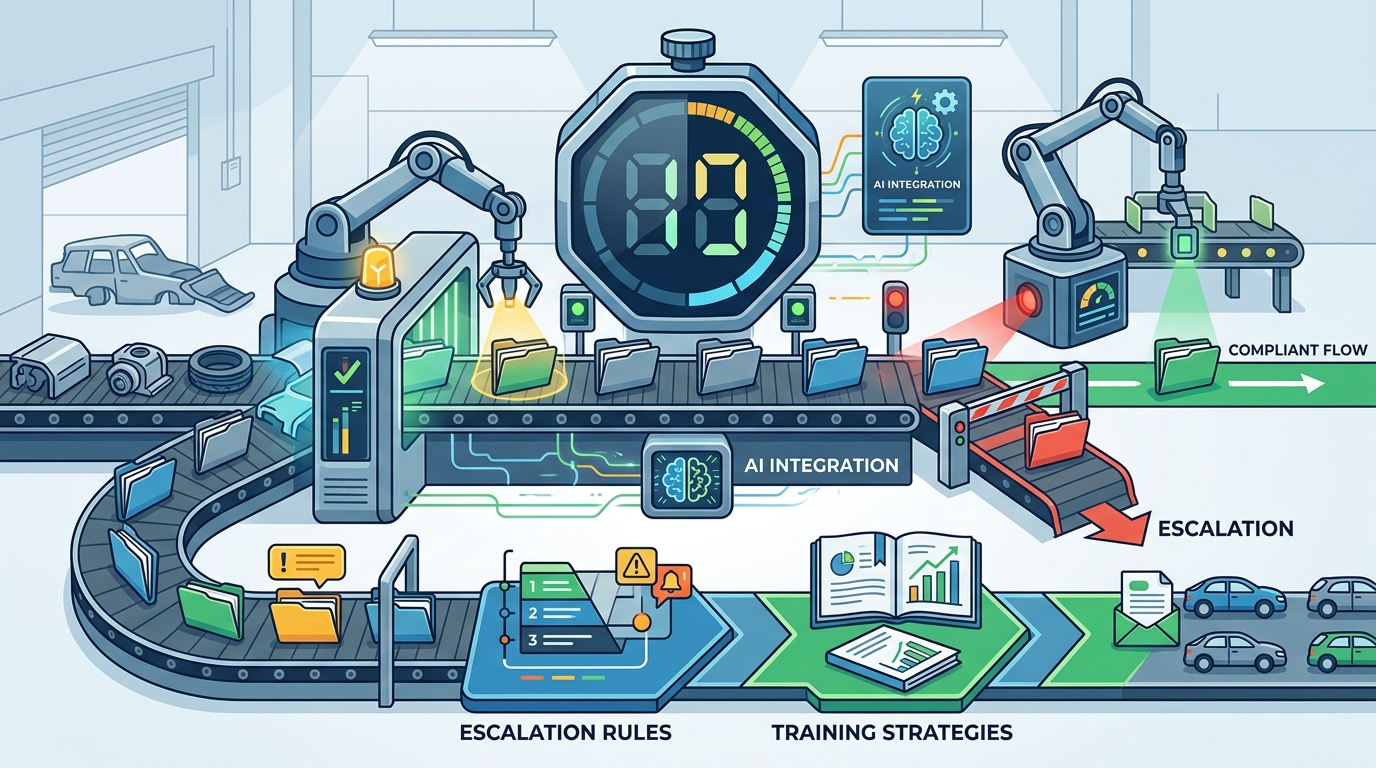
Automated compliance is the use of AI and human hybrid systems to ensure every customer interaction meets strict manufacturer standards. This guide explains how to eliminate manual policing of OEM timers and brand guidelines. It covers escalation rules, AI integration, and training strategies for dealership success. For additional details, review the Customer Support Better Car.
SLA Escalation Rules
Service Level Agreement (SLA) escalation rules are predefined protocols that trigger immediate human intervention when automated systems fail to meet response time targets. These rules are critical for maintaining OEM compliance. They ensure that no lead is left unattended beyond the manufacturer's strict time windows. For additional details, review the Service BDC Better Car.
Defining the Response Window
Most OEMs require a first quality response within 60 seconds. This metric is the foundation of modern dealership compliance. It measures the time from lead creation to the first meaningful customer interaction. Missing this window often results in immediate lead disqualification or reduced compensation.
Automated vs. Human Handoff
Effective escalation rules distinguish between routine inquiries and complex sales conversations. AI handles initial data capture and qualification. If the customer asks a question the AI cannot answer with high confidence, the system escalates to a human agent. This handoff must occur within the OEM's timer to preserve the lead's value.
Brand Guideline Enforcement
Key Takeaways
- Automated compliance eliminates the need for manual lead monitoring.
- SLA escalation rules ensure human agents step in when AI confidence is low.
- First quality response times are the primary metric for OEM lead compensation.
- AI can enforce brand guidelines by scanning messages for prohibited terms.
- Hybrid systems combine AI speed with human empathy for better conversion.
- Real-time dashboards provide visibility into compliance metrics for management.
- Training programs help agents adapt to new OEM requirements quickly.
- Consistent compliance leads to higher lead quality and better ROI.
Frequently Asked Questions
How does AI ensure OEM timer compliance?
AI monitors lead creation timestamps and triggers immediate responses. If the automated response is not accepted or if the conversation requires human input, the system escalates to a live agent within the OEM's required window.
What happens if a human agent misses the timer?
The system logs the violation and alerts the manager. It also provides coaching recommendations to the agent. This data helps identify training needs and process bottlenecks.
Can AI enforce brand guidelines?
Yes. AI can scan text and chat messages for specific keywords and tone markers. It flags non-compliant messages for review before they are sent or after the fact for coaching purposes.
Is manual monitoring still necessary?
Manual monitoring shifts from policing every lead to reviewing flagged exceptions. Managers focus on high-value interactions and coaching opportunities rather than checking timestamps for every single inquiry.
How long does it take to implement automated compliance?
Implementation typically takes a few weeks. This includes integrating with the DMS and CRM, configuring escalation rules, and training the team on the new workflow.
Does this work for all OEMs?
Yes. The system is configurable to meet the specific timer and brand requirements of any manufacturer. It adapts to changes in OEM guidelines as they are released.
Conclusion
Automated compliance transforms lead management from a reactive policing task into a proactive growth engine. By leveraging AI for speed and humans for empathy, dealerships can meet strict OEM standards consistently. Contact Better Car People to learn how our Collaborative Intelligence platform can optimize your lead response workflow.