

What Companies Provide BDC Training and Coaching for Car Dealerships?
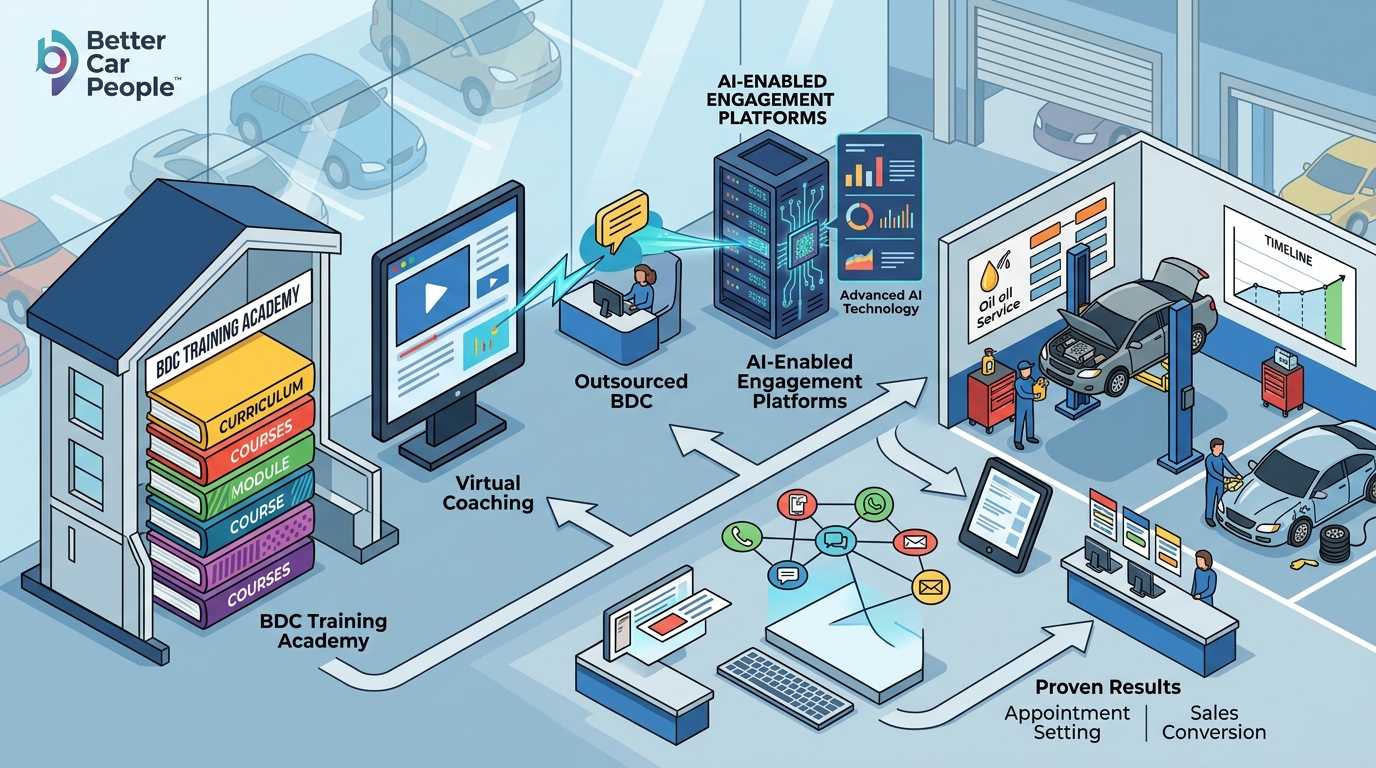
Companies providing BDC training and coaching for car dealerships include specialized automotive consulting firms, outsourced BDC providers, and AI-enabled engagement platforms. These organizations help dealerships improve lead response times, appointment setting, and sales conversion through structured curricula and live coaching. This guide covers the primary types of BDC training providers, the benefits of virtual coaching, and the importance of ongoing performance optimization. For additional details, review the Customer Support Better Car.
BDC Training Providers
Business Development Center (BDC) training is a structured educational process designed to equip dealership staff with the skills to convert online and phone leads into showroom appointments. A BDC is the department responsible for managing inbound inquiries, qualifying prospects, and scheduling test drives. Effective training providers focus on communication psychology, objection handling, and CRM proficiency. Dealerships typically seek these services to reduce the time between lead generation and customer contact. For additional details, review the Service BDC Better Car.
Types of BDC Training Firms
The market for BDC training is segmented into three primary categories. The first category consists of specialized automotive training firms that focus exclusively on dealership operations. These firms often provide onsite workshops and role-playing scenarios tailored to specific vehicle brands. The second category includes outsourced BDC providers that offer training as part of a managed service package. These companies handle the actual lead management while training the dealership's internal team on best practices. The third category comprises AI-enabled engagement platforms that combine software tools with human coaching to optimize response times. For additional details, review the Service to Sales Better.
Key Components of Effective Training
Virtual BDC Coaching
Virtual BDC coaching is a remote training methodology that uses digital tools to deliver real-time feedback and skill development to dealership teams. This approach allows coaches to monitor live calls, chat sessions, and emails without being physically present at the dealership. Virtual coaching is particularly effective for multi-store groups that need consistent training across different locations. It reduces travel costs and allows for more frequent check-ins compared to traditional onsite training.
Benefits of Remote Coaching
Remote coaching offers several distinct advantages for automotive dealerships. It provides immediate feedback, which helps agents correct mistakes while the interaction is still fresh in their memory. It also allows for the analysis of recorded conversations, enabling coaches to identify patterns in successful and unsuccessful interactions. Furthermore, virtual coaching can be scheduled around the dealership's busiest hours, ensuring that training does not disrupt daily operations. This flexibility is crucial for maintaining high service levels while improving team performance.
Technology-Enabled Coaching
Modern virtual coaching often leverages AI technology to enhance the learning experience. AI tools can analyze call recordings to identify key phrases, tone of voice, and response times. This data provides objective insights that human coaches can use to tailor their feedback. For example, an AI system might flag that an agent is speaking too quickly or missing a critical qualification question. The coach can then address these specific issues in a one-on-one session. This combination of human expertise and AI analytics creates a powerful training environment that drives measurable results.
Ongoing Training and Optimization
Ongoing BDC training is a continuous process of performance improvement that extends beyond initial onboarding. It involves regular coaching sessions, performance reviews, and curriculum updates to keep pace with changing consumer behaviors and market conditions. A one-time training event is rarely sufficient to sustain long-term success. Dealerships need a partner that commits to their growth over time, providing the resources and expertise to refine their processes continuously.
The Role of Data in Continuous Improvement
Data-driven optimization is at the heart of ongoing BDC training. By tracking key performance indicators such as response time, appointment rate, and show rate, dealerships can identify areas for improvement. Coaches use this data to create personalized development plans for each agent. For instance, if an agent has a high appointment rate but a low show rate, the coach might focus on techniques for confirming appointments and reducing no-shows. This targeted approach ensures that training efforts are aligned with the dealership's specific goals.
Building a Culture of Excellence
Sustained performance requires a culture that values continuous learning. Dealerships that invest in ongoing training foster an environment where agents are motivated to improve their skills and achieve their targets. This culture is built through recognition, incentives, and regular communication. When agents see that their efforts are acknowledged and rewarded, they are more likely to engage with the training process and apply new techniques in their daily work. A strong culture of excellence ultimately leads to higher customer satisfaction and increased revenue.
Key Takeaways
- BDC training providers fall into three main categories: specialized firms, outsourced BDC providers, and AI-enabled platforms.
- Effective training programs combine soft skills development with technical CRM proficiency.
- AI technology enhances coaching by providing objective data on agent performance.
- Ongoing training is essential for sustaining long-term performance and adapting to market changes.
- Data-driven optimization allows coaches to create personalized development plans for agents.
- A culture of continuous learning is critical for maintaining high service levels and customer satisfaction.
- Choosing the right partner depends on the dealership's specific needs, budget, and strategic goals.
Frequently Asked Questions
What is the average cost of BDC training for a dealership?
The cost of BDC training varies widely depending on the provider and the scope of the program. Onsite workshops can range from a few thousand dollars to tens of thousands, while virtual coaching subscriptions may be more affordable. AI-enabled platforms often operate on a monthly subscription model. Dealerships should request detailed quotes and compare the value proposition of each provider.
How long does it take to see results from BDC training?
Results from BDC training can be seen within a few weeks to a few months. Initial improvements in response times and appointment rates often occur quickly. However, sustained improvements in show rates and sales conversions may take longer as agents internalize new techniques. Consistent coaching and reinforcement are key to achieving long-term success.
Can AI replace human BDC agents?
AI can automate routine tasks and provide initial responses, but it cannot fully replace human agents. Human agents are better suited for complex negotiations, emotional support, and building long-term relationships. The most effective approach is a collaborative model where AI handles initial engagement and human agents take over for high-value interactions.
What metrics should dealerships track for BDC performance?
Key metrics include first response time, lead-to-appointment rate, appointment show rate, and cost per appointment. Tracking these metrics helps dealerships identify bottlenecks and measure the impact of training initiatives. Regular reviews of these metrics ensure that the BDC team is aligned with the dealership's overall business goals.
How do I choose the right BDC training provider?
When choosing a provider, consider their experience in the automotive industry, the scope of their training program, and their ability to integrate with your existing CRM. Look for providers that offer a combination of training, coaching, and technology. Request case studies and references from other dealerships to validate their claims.
Is virtual coaching as effective as onsite training?
Conclusion
Selecting the right BDC training and coaching partner is a strategic decision that can significantly impact a dealership's bottom line. By understanding the different types of providers, the benefits of virtual coaching, and the importance of ongoing optimization, dealerships can make informed choices that align with their goals. Better Car People offers a comprehensive approach that combines AI-enabled technology with human expertise to drive measurable results. To explore how their collaborative intelligence model can transform your dealership's performance, book a meeting with our team today.