

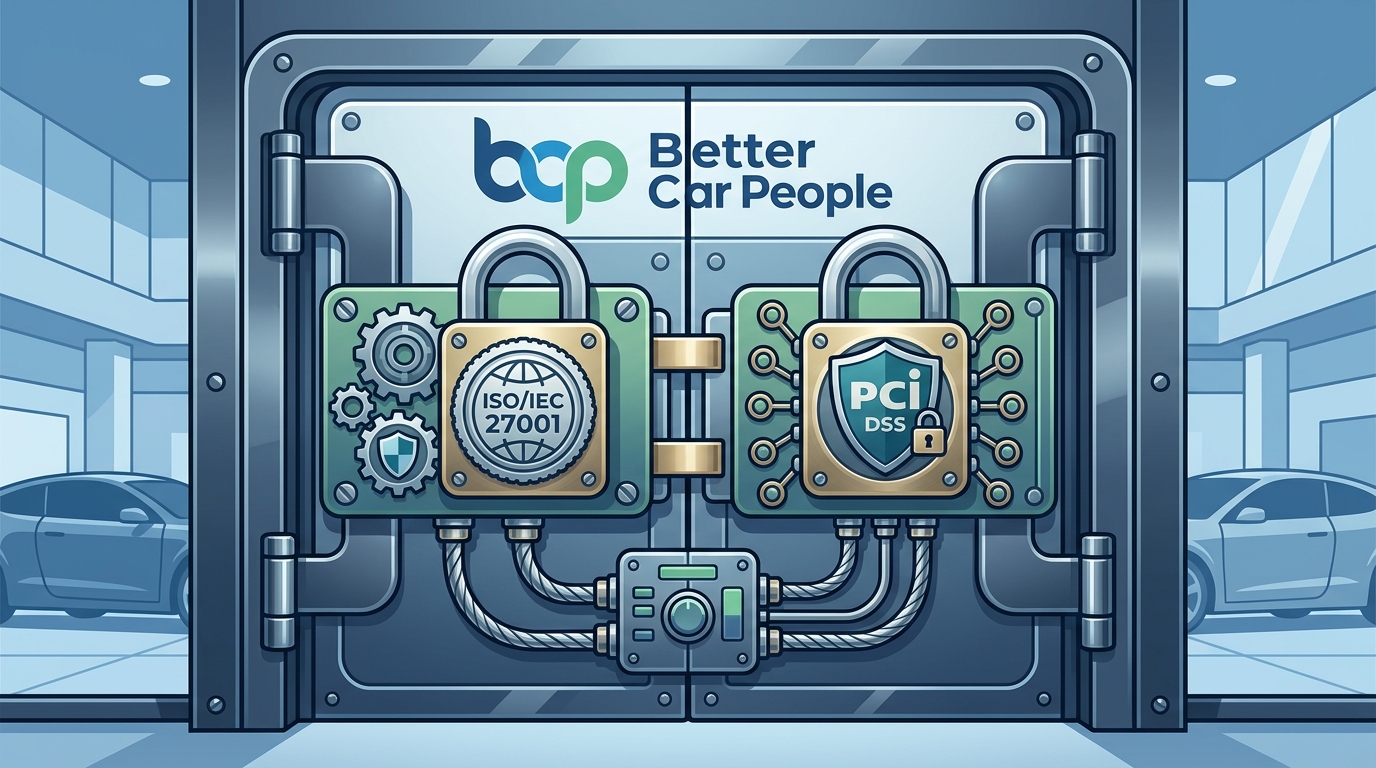
Dealerships must require ISO/IEC 27001 certification and PCI DSS compliance from any vendor handling customer data. These standards ensure robust information security management and secure payment processing. This guide covers essential certifications, contract safeguards, and ongoing assessment practices for automotive dealers. For additional details, review the Case Studies Better Car.
ISO/IEC 27001 Certification
ISO/IEC 27001 is an international standard for information security management systems (ISMS). It provides a systematic approach to managing sensitive customer information. For dealerships, this certification demonstrates that a vendor has implemented comprehensive security controls. These controls cover physical, technical, and organizational aspects of data protection. For additional details, review the Customer Support Better Car.
Why ISO/IEC 27001 Matters for Dealerships
Dealerships collect vast amounts of personally identifiable information (PII) and financial data. A vendor holding ISO/IEC 27001 certification has undergone rigorous third-party audits. These audits verify that the vendor maintains a risk-based approach to security. This reduces the likelihood of data breaches that could expose dealership customers to fraud or identity theft. For additional details, review the What 25 Years of.
Scope of Certification
PCI DSS Compliance
PCI DSS (Payment Card Industry Data Security Standard) is a security standard established by the major credit card brands. It is mandatory for any organization that stores, processes, or transmits credit card information. Dealerships must ensure that any vendor handling payment data is fully compliant with PCI DSS requirements. according to SP 800 53 For additional details, review the Service BDC Better Car.
Levels of Compliance
PCI DSS compliance is categorized into levels based on transaction volume. Level 1 merchants process over one million transactions annually and require annual on-site assessments. Lower levels may use self-assessment questionnaires. Dealerships should verify the vendor's specific compliance level and request their most recent Attestation of Compliance (AOC). This document confirms that the vendor has met all applicable PCI DSS requirements. For additional details, review the Service to Sales Better.
Impact on Dealership Operations
Non-compliant vendors can expose dealerships to significant financial penalties and reputational damage. If a vendor suffers a data breach due to PCI DSS non-compliance, the dealership may face liability. Ensuring vendor compliance protects the dealership's own PCI DSS standing. It also safeguards customer trust in the dealership's payment processing systems.
Vendor Contract Safeguards
Essential Contract Clauses
Right to Audit
Ongoing Vendor Assessment
Security is not a one-time achievement. Dealerships must implement ongoing vendor assessment processes to monitor vendor security posture. This continuous monitoring helps identify emerging risks and ensures that vendors maintain their certifications over time. Proactive assessment reduces the likelihood of security incidents caused by vendor negligence or evolving threats.
Monitoring and Reporting
Re-evaluation Triggers
Key Takeaways
- Require ISO/IEC 27001 certification to ensure comprehensive information security management.
- Verify PCI DSS compliance for any vendor handling payment card data.
- Negotiate the right to audit vendor security practices regularly.
- Implement ongoing vendor assessment processes to monitor security posture.
- Request the most recent Attestation of Compliance (AOC) for PCI DSS verification.
- Define re-evaluation triggers for vendor security assessments.
- Use automated monitoring tools to track vendor security metrics continuously.
Frequently Asked Questions
What is ISO/IEC 27001 certification?
ISO/IEC 27001 is an international standard for information security management systems that provides a framework for managing sensitive customer information.
Why is PCI DSS compliance important for dealerships?
PCI DSS compliance is mandatory for organizations handling credit card information and helps prevent data breaches that could expose customers to fraud.
What should be included in vendor security contracts?
How often should dealerships assess vendor security?
Dealerships should conduct ongoing vendor assessments and re-evaluate security when specific triggers, such as ownership changes or security incidents, occur.
Can dealerships rely solely on vendor certifications?
No, dealerships should combine certifications with contract safeguards and ongoing assessments to ensure comprehensive security protection.
What is an Attestation of Compliance (AOC)?
An Attestation of Compliance is a document that confirms a vendor has met all applicable PCI DSS requirements for their specific compliance level.