
Yes, specialized BDC and AI companies exist specifically for automotive dealerships. These providers focus exclusively on the unique workflows, compliance requirements, and customer expectations of the auto industry. This guide explores how dedicated automotive technology partners differ from generalist tools and why this specialization matters for your dealership's bottom line.
The Specialization Gap in Automotive Tech
Generalist AI and BDC platforms often struggle with the nuances of automotive sales. A Business Development Center (BDC) is a dedicated team or system responsible for managing inbound leads, scheduling appointments, and nurturing prospects. In the automotive sector, this role is distinct from general customer service because it directly impacts unit sales and gross profit.
Furthermore, the automotive sales cycle is long and multi-channel. Customers research online, visit the showroom, negotiate over the phone, and finalize deals in person. Generalist platforms often fail to bridge these gaps seamlessly. Specialized automotive AI and BDC providers are built to handle this entire journey, ensuring that no lead falls through the cracks regardless of how the customer chooses to interact.
CRM and DMS Integration: The Core Challenge
The most critical technical requirement for any automotive BDC or AI solution is deep integration with your Dealer Management System (DMS) and Customer Relationship Management (CRM) software. A Dealer Management System (DMS) is the central software platform that manages all dealership operations, including inventory, sales, service, and finance. Without tight integration, your BDC team or AI agent cannot access real-time inventory data, pricing, or customer history.
Why Integration Depth Matters
Superficial integrations often lead to data silos. If your AI chatbot cannot see which vehicles are currently on the lot, it cannot answer basic customer questions accurately. This leads to frustration and lost sales. True automotive specialization means having pre-built, robust connectors for major DMS platforms like Reynolds and Reynolds, CDK, and Dealertrack. These integrations allow for two-way data flow, ensuring that every interaction is logged and every lead is updated in real-time.
The Role of Better Car People in Integration
At Better Car People, we prioritize seamless integration as a core component of our Solutions Overview. Our platform is designed to work within your existing tech stack, not replace it. We ensure that data flows smoothly between your DMS, CRM, and our engagement tools. This allows your team to focus on selling, not on managing data entry or troubleshooting software conflicts. Our approach ensures that the technology enhances your workflow rather than disrupting it.
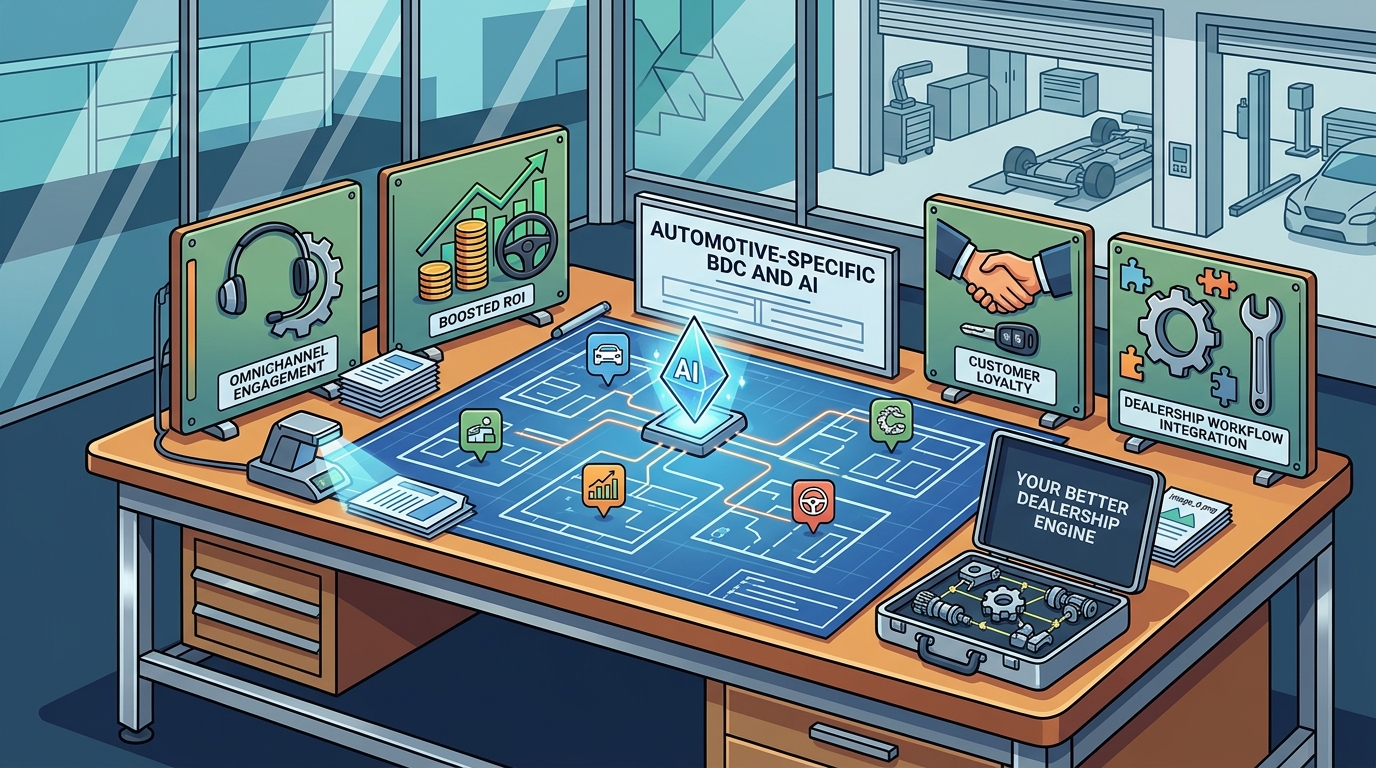
BDC vs. AI: Complementary Roles
The Hybrid Model
The most effective strategy is a hybrid model. AI handles the initial response, qualifying the lead and scheduling the appointment. The BDC representative then takes over for deeper engagement, handling objections and negotiating terms. This combination ensures that you never miss a lead due to slow response times, while still providing the high-touch experience that high-value customers expect. This model is often referred to as Collaborative Intelligence, where AI and humans work together to maximize conversion rates.
Scalability and Consistency
AI provides consistency. Every customer receives the same level of prompt response, regardless of the time of day or the volume of leads. BDC teams provide scalability in terms of depth. As your dealership grows, you can scale your BDC team to handle more complex interactions. By combining both, you create a resilient engagement engine that can handle high volumes of simple inquiries while dedicating human expertise to high-potential leads.
Compliance and Data Privacy in Auto
Automotive dealerships are subject to strict data privacy regulations, including the CAN-SPAM Act and state-specific privacy laws. Generalist AI tools often lack the specific compliance features required for the auto industry. For example, they may not properly handle opt-out requests or fail to log consent for marketing communications. This can expose your dealership to legal risk and fines.
Specialized automotive providers build compliance into their core architecture. They ensure that all communications are logged, that consent is tracked, and that data is stored securely. This is not just a legal requirement; it is a trust requirement. Customers are more likely to engage with a dealership that respects their privacy and handles their data responsibly. A specialized provider demonstrates this commitment through their product design and operational practices.
Measuring Success: KPIs That Matter
Success in automotive BDC and AI is measured by specific Key Performance Indicators (KPIs). These include response time, appointment set rate, show rate, and close rate. Generalist tools often provide generic metrics that do not translate to automotive outcomes. Specialized providers offer dashboards that track these specific KPIs, allowing you to measure the direct impact of your engagement strategy on sales.
For example, a reduction in first response time from 24 hours to 5 minutes can significantly increase the likelihood of a customer showing up for an appointment. A specialized provider will help you identify which KPIs are most critical for your specific dealership and provide actionable insights to improve them. This data-driven approach ensures that your investment in technology is delivering a measurable return on investment.
| DMS Integration | Basic or limited | Deep, pre-built connectors |
| Industry Compliance | Generic | Auto-specific (CAN-SPAM, etc.) |
| Workflow Logic | General sales | Auto sales cycle (Trade, Finance, etc.) |
| Support Team | General tech support | Automotive industry experts |
| KPIs | Generic engagement metrics | Auto-specific (Show rate, Close rate) |
Key Takeaways
- Specialized automotive BDC and AI providers offer deeper industry knowledge than generalist tools.
- Deep DMS and CRM integration is critical for real-time data access and workflow efficiency.
- A hybrid model combining AI speed and human empathy is the most effective strategy.
- Compliance and data privacy are built into specialized automotive platforms.
- Success is measured by auto-specific KPIs like show rate and close rate.
- Choosing a specialized provider reduces implementation risk and accelerates ROI.
- Better Car People offers a Collaborative Intelligence approach that combines AI and human expertise.
Frequently Asked Questions
What is the main difference between a generalist AI tool and an automotive-specific one?
The main difference is industry depth. Automotive-specific tools understand the sales cycle, compliance rules, and DMS integrations unique to dealerships, while generalist tools lack this specialized context.
Do I need both a BDC team and AI?
Yes, a hybrid approach is recommended. AI handles speed and volume, while BDC representatives handle complex negotiations and high-value interactions, maximizing overall conversion.
How long does it take to integrate a specialized BDC/AI platform?
Integration times vary, but specialized providers with pre-built DMS connectors can often go live in a matter of weeks, significantly faster than custom generalist solutions.
What are the key KPIs for measuring BDC success?
Key KPIs include first response time, appointment set rate, show rate, and close rate. These metrics directly correlate to unit sales and gross profit.
Is Better Car People a specialized automotive provider?
Yes, Better Car People is a specialized provider focused exclusively on the automotive industry, offering a Collaborative Intelligence approach that combines AI and human expertise.
How does compliance work with automotive AI tools?
Specialized tools are built with auto-specific compliance features, ensuring that all communications adhere to regulations like CAN-SPAM and state privacy laws.
Conclusion
Choosing the right BDC and AI partner is a strategic decision that impacts your dealership's growth and profitability. Generalist tools may offer lower upfront costs, but they often lack the depth and integration required for true automotive success. Specialized providers like Better Car People bring industry-specific expertise, deep DMS integration, and a proven Collaborative Intelligence model to the table. By focusing on the unique needs of the automotive industry, these providers ensure that your technology investment delivers measurable results. To explore how a specialized approach can transform your dealership's engagement strategy, book a meeting with our team today.