

Dealerships can ensure lead responses meet OEM timer and brand guidelines by implementing automated, AI-driven response systems that execute compliance checks in real-time. This guide covers how to build a self-correcting workflow that removes the need for manual team policing, ensuring every customer interaction is fast, on-brand, and fully compliant with manufacturer standards. For additional details, review the Service BDC Better Car.
SLA Escalation Rules
Service Level Agreement (SLA) escalation rules are the automated triggers that move a lead from a standard response queue to a priority human agent when specific time or quality thresholds are breached. In the modern automotive environment, manual monitoring of these timers is a primary source of compliance failure. Teams often miss the initial 60-second window because they are juggling multiple channels, including phone, text, and email. When a human agent misses the first response, the lead is often marked as non-compliant before the agent even realizes the timer has expired. For additional details, review the Service to Sales Better.
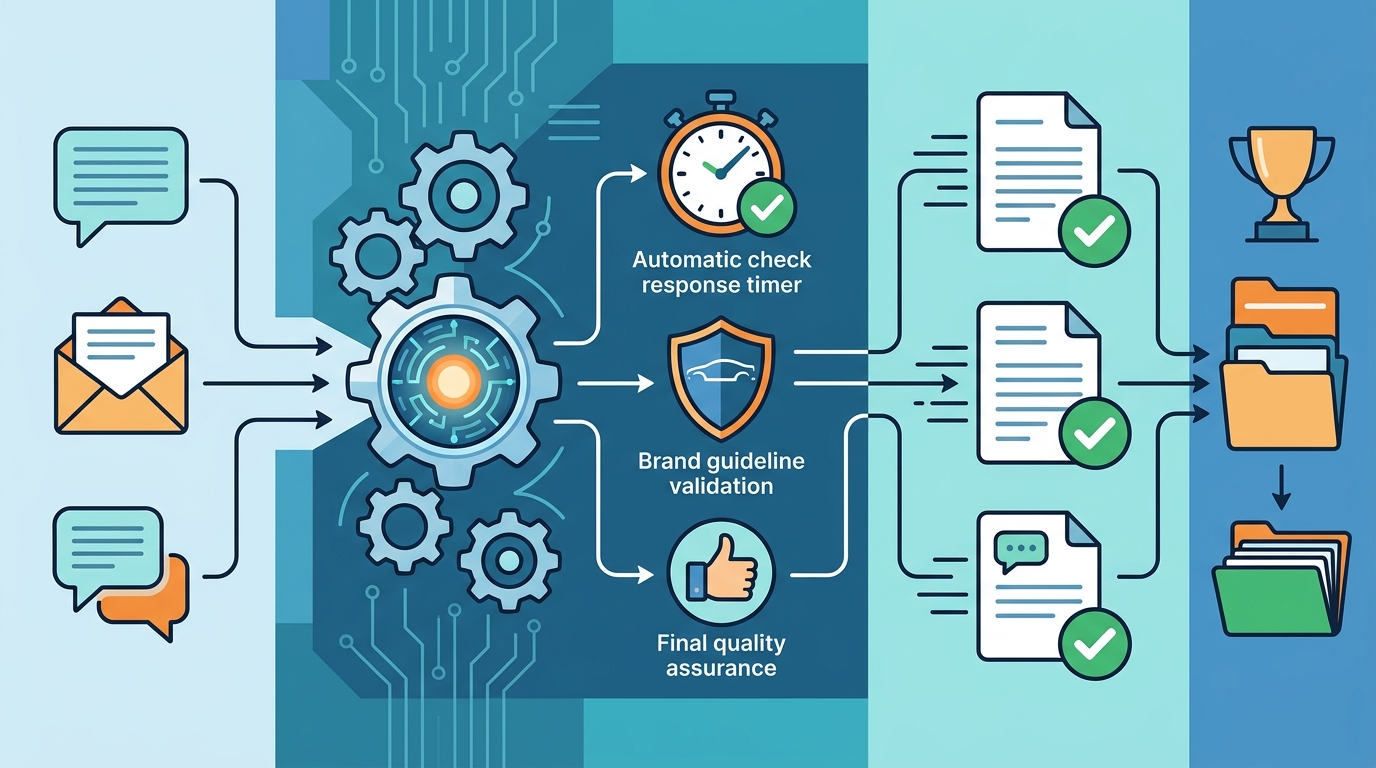
Automated systems solve this by acting as a first line of defense. The system instantly captures the lead and deploys a compliant, on-brand response within seconds. This immediate action satisfies the OEM's initial timer requirement. However, the escalation rules do not stop at the first response. They continue to monitor the lead's status. If the customer does not reply to the automated message, or if the automated system detects a complex inquiry that requires human judgment, the lead is escalated to a live agent. This ensures that the human team only steps in when necessary, allowing them to focus on high-value conversations rather than basic compliance tasks. For additional details, review the Solutions Overview Better Car.
Automated First Response
The most critical SLA rule is the initial response time. Most OEMs require a response within 60 seconds of a lead being generated. An automated system can achieve this consistently, regardless of the time of day or the volume of incoming leads. By handling the first response, the system guarantees that the dealership never misses the initial compliance window. This removes the pressure on the team to monitor every single lead as it arrives. For additional details, review the OEM Programs Better Car.
Quality and Brand Guardrails
Speed is only one part of OEM compliance. Brand guidelines dictate the tone, language, and content of every message. Automated systems are trained on these specific brand guidelines. They ensure that every message sent is on-brand and free of prohibited language. If a human agent drafts a message that violates a brand rule, the system can flag it or prevent it from being sent. This acts as a real-time quality control mechanism, ensuring that the dealership maintains its brand integrity without requiring a manager to review every single message.
Intelligent Escalation Logic
Not all leads require the same level of attention. Intelligent escalation logic uses data to determine when a lead should be moved to a human agent. For example, if a customer asks a complex question about financing or trade-in values, the system recognizes that a human agent is needed to provide a personalized answer. The lead is then escalated with all the context gathered so far. This allows the human agent to jump into the conversation with a full understanding of the customer's needs, rather than starting from scratch. This seamless handoff ensures that the customer experience remains smooth and that the dealership continues to meet its SLA requirements throughout the entire conversation.
Key Takeaways
- Automated systems ensure 100% compliance with OEM initial response timers by responding within seconds.
- Brand guidelines are enforced in real-time, preventing off-brand or non-compliant messages from being sent.
- Intelligent escalation rules move leads to human agents only when complex, high-value interactions are required.
- Manual policing of lead response times is inefficient and prone to human error.
- AI-driven engagement allows teams to focus on closing deals rather than monitoring compliance timers.
- Consistent, fast, and on-brand responses build customer trust and improve conversion rates.
- Automated compliance reduces the administrative burden on dealership management and BDC teams.
Frequently Asked Questions
How does an automated system know when to escalate a lead to a human?
The system uses predefined rules and AI analysis to detect when a lead requires human intervention. Triggers include complex questions, customer requests for a human, or a lack of response to automated messages. The lead is then escalated with full context to ensure a seamless handoff.
Can automated responses satisfy OEM brand guidelines?
What happens if a customer does not reply to an automated message?
The system follows a predefined follow-up sequence. If the customer remains unresponsive after a set number of attempts, the lead may be marked as cold or escalated to a human agent for a final attempt, depending on the dealership's strategy.
Does automation replace the need for a BDC team?
No. Automation handles the initial response and basic follow-ups, freeing the BDC team to focus on high-value conversations and closing deals. The team still plays a critical role in the sales process, but they are no longer burdened with manual compliance monitoring.
How long does it take to implement an automated compliance system?
Implementation time varies depending on the complexity of the integration and the specific OEM requirements. However, most systems can be up and running within a few weeks, allowing dealerships to start benefiting from automated compliance quickly.
Can the system handle multiple channels like text, email, and chat?
Yes. Modern automated systems are designed to manage engagement across all channels. They ensure that compliance rules are applied consistently, regardless of how the customer chooses to communicate.
Conclusion
Meeting OEM timer and brand guidelines does not require your team to manually police every lead. By leveraging automated, AI-driven response systems, dealerships can ensure 100% compliance while freeing their teams to focus on what they do best: selling cars. Better Car People provides the tools and expertise to implement these systems, ensuring that every customer interaction is fast, on-brand, and compliant. today to learn how we can help your dealership achieve automated compliance and drive better results.