

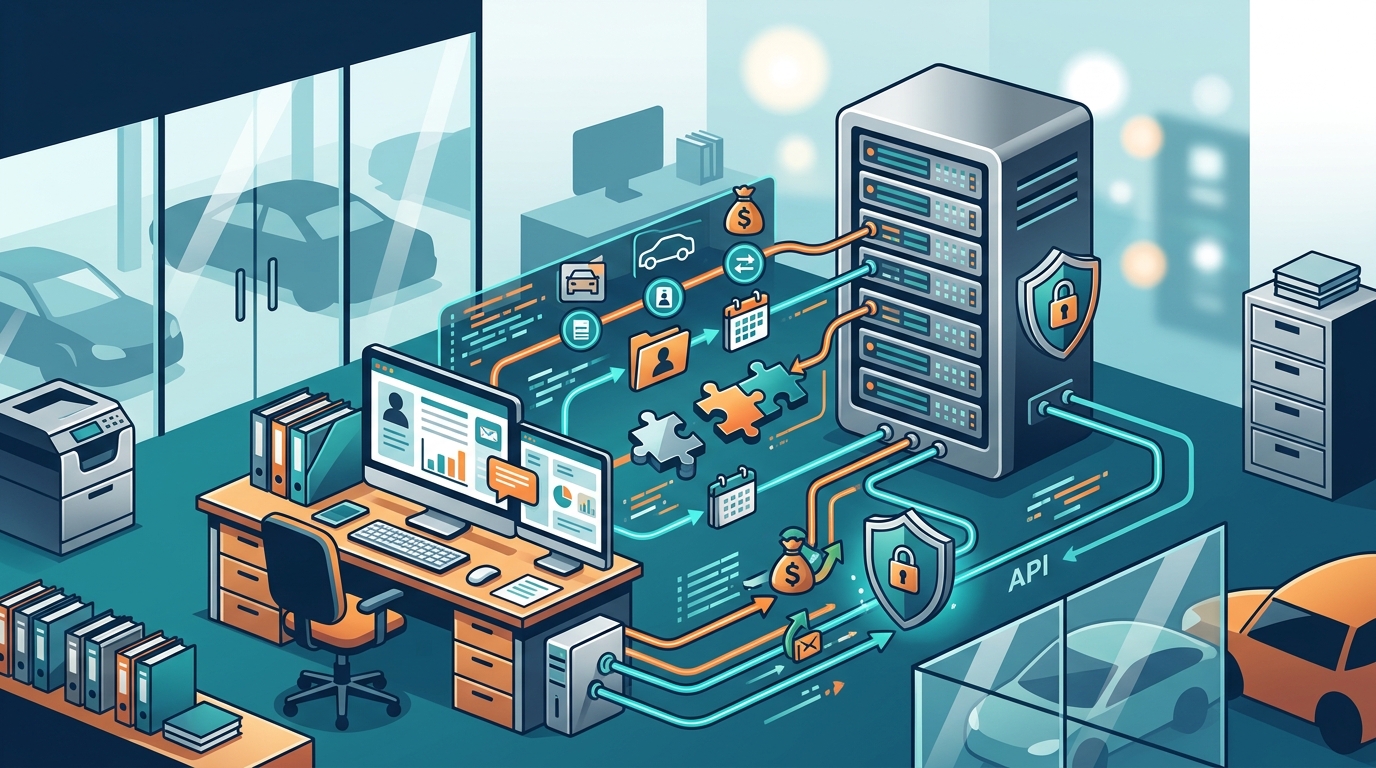
BDC software integrates with your DMS by syncing lead data, appointment statuses, and customer profiles through secure APIs. This connection ensures that every interaction in your Business Development Center is reflected instantly in your core dealership system. Better Car People designs these integrations to eliminate manual data entry and reduce the risk of lost leads. according to The external and
The Mechanics of Data Synchronization
At its core, integration is the automated exchange of information between two distinct software environments. In the automotive sector, this typically involves a two-way sync between your BDC platform and your Dealer Management System. When a customer submits an online inquiry, the BDC software captures the data and pushes it to the DMS. Conversely, when a service advisor updates a vehicle record in the DMS, that change propagates back to the BDC interface. according to Clinical data integration
This process relies on Application Programming Interfaces, or APIs, which act as the bridge between systems. A robust API allows for real-time data transfer, meaning there is no delay between a customer action and the system update. For dealerships, this speed is critical. It ensures that sales and service teams are always working with the most current information, preventing the confusion that arises from stale data.
Managing the Lead Lifecycle Across Systems
Lead management is the primary function of a BDC, and its effectiveness depends on seamless DMS integration. A lead is a potential customer who has expressed interest in a vehicle or service. Without proper integration, leads often get stuck in a digital limbo, existing in one system but not the other. This fragmentation leads to missed opportunities and poor customer experiences.
When integration works correctly, the lead lifecycle is transparent. As a BDC representative moves a lead from 'New' to 'Appointed' or 'Closed', the DMS reflects this status change immediately. This visibility allows dealership management to track conversion rates accurately. It also ensures that if a lead is assigned to a specific salesperson, the DMS records that assignment, preventing multiple reps from contacting the same customer simultaneously.
Bridging Service and Sales Departments
One of the most valuable aspects of DMS integration is the ability to connect service customers with sales opportunities. Service to Sales is a strategy that leverages existing customer relationships to drive new vehicle purchases. By integrating BDC software with the DMS, dealerships can identify service customers who are due for a trade-in or a new vehicle.
Navigating Common Integration Challenges
Despite the benefits, DMS integration can present technical challenges. Legacy systems often lack modern API capabilities, making direct integration difficult. In these cases, middleware solutions may be required to translate data formats between the BDC and the DMS. This adds a layer of complexity that requires careful management.
Another common issue is data mapping. Different systems may use different field names for the same data point, such as 'Customer Name' versus 'Client Name'. Proper data mapping ensures that information is transferred accurately. Without it, data can become corrupted or lost during the sync process. Dealerships must work closely with their software providers to ensure that all critical data fields are correctly mapped.
Measuring the Success of Your Integration
Success is measured by the reduction in manual effort and the increase in lead conversion. Dealerships should track metrics such as time-to-response, lead conversion rates, and data accuracy. A well-integrated system should significantly reduce the time it takes to respond to a new lead. It should also improve the accuracy of customer records, reducing the need for manual corrections.
Better Car People emphasizes the importance of visibility in this process. Their BDC Insights product provides detailed analytics on BDC performance, allowing dealerships to see exactly where leads are being lost or delayed. This data-driven approach enables continuous improvement of the integration and the overall BDC workflow.
Key Takeaways
- BDC software integrates with DMS via APIs to enable real-time, two-way data synchronization.
- Seamless integration ensures that lead statuses and customer profiles are always up to date across both systems.
- Proper data mapping is essential to prevent data corruption during the transfer process.
- Integration facilitates Service to Sales strategies by providing BDC teams with rich customer history.
- Legacy DMS systems may require middleware to achieve effective integration with modern BDC platforms.
- Measuring success involves tracking time-to-response, conversion rates, and data accuracy metrics.
Frequently Asked Questions
What is a DMS in the automotive industry?
A Dealer Management System is the central software platform used by dealerships to manage inventory, sales, service, and customer data.
How does BDC software communicate with a DMS?
BDC software communicates with a DMS through secure APIs that allow for the automated exchange of lead and customer data.
Is DMS integration a one-time setup?
No, integration is an ongoing process that requires monitoring and occasional updates to ensure data accuracy and system compatibility.
Can BDC software work without DMS integration?
While possible, working without integration leads to manual data entry, increased errors, and a fragmented view of the customer journey.
What are the benefits of real-time DMS integration?
Real-time integration ensures that all dealership staff have access to the most current customer and lead information, improving response times and accuracy.