

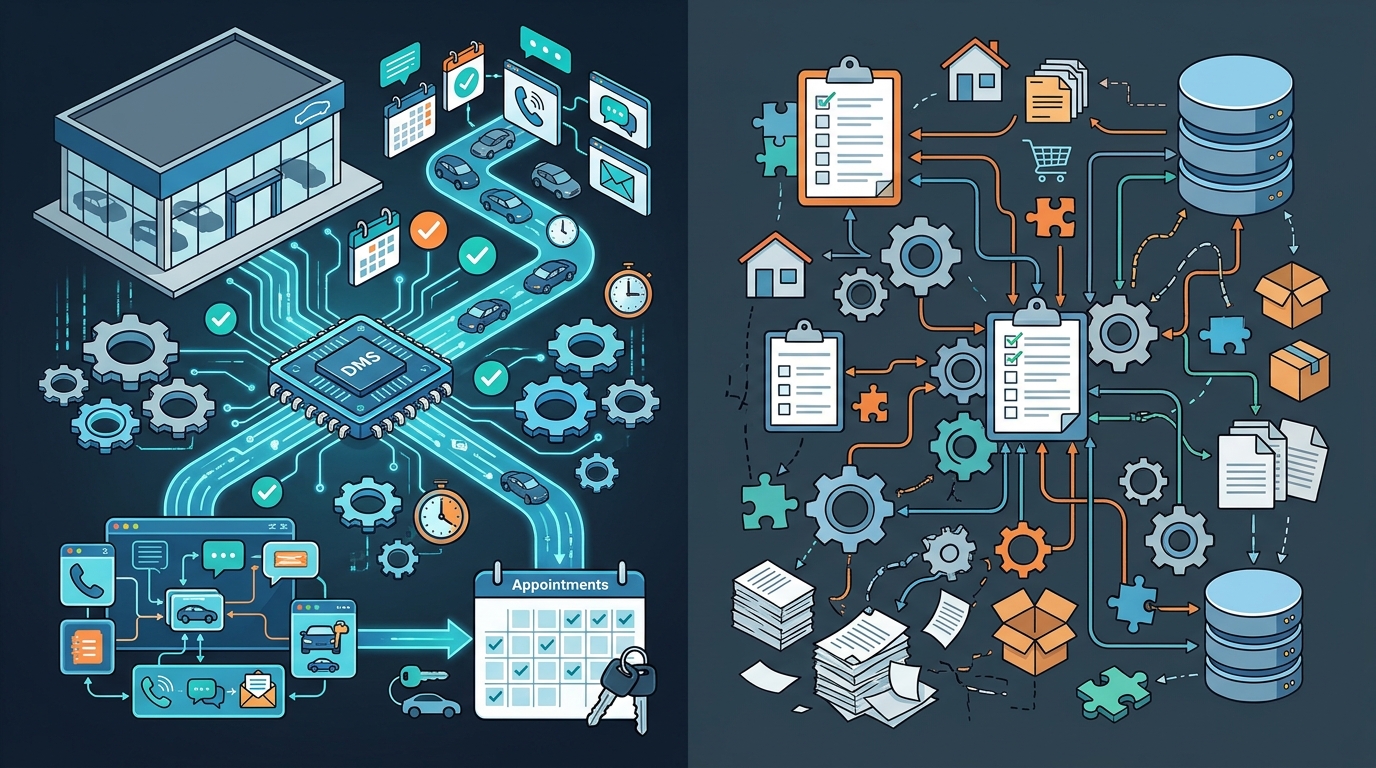
Choosing the right software to manage customer interactions is a critical decision for any automotive retail operation. A DMS-synced BDC tool is a specialized platform that integrates directly with your Dealer Management System to automate lead handling and appointment setting. In contrast, a generic CRM is a broad customer relationship management tool designed for various industries that requires manual configuration to fit automotive workflows. For dealerships that need automated, compliant lead response and seamless data flow, a specialized BDC tool is the superior choice. For organizations that prioritize broad marketing automation over daily operational efficiency, a generic CRM may suffice. Better Car People provides a specialized approach that combines AI and human expertise to manage these interactions effectively.
What is a DMS-Synced BDC Tool?
A DMS-synced BDC tool is a specialized software solution designed specifically for the automotive industry that connects directly to your Dealer Management System. This integration allows the tool to automatically pull in new leads from various sources and push appointment data back into your DMS without manual entry. The primary function of this tool is to manage the Business Development Center (BDC) workflow, which includes calling, texting, and emailing potential customers to convert them into showroom appointments. Because the software is built for cars, it understands specific automotive terminology, lead scoring models, and OEM compliance requirements out of the box.
Key Strengths of Specialized BDC Tools
Specialized BDC tools offer deep integration with the systems dealers already use daily. This means that when a customer books an appointment, the slot is immediately reserved in the DMS, preventing double-booking and scheduling conflicts. These tools often include built-in scripts and coaching features that help BDC agents communicate effectively. Furthermore, they are designed to handle high volumes of inbound and outbound communications across multiple channels, such as phone, text, and email, simultaneously.
Limitations and Best Fit
The main limitation of a DMS-synced BDC tool is its narrow focus. It is optimized for lead management and appointment setting, not for broad marketing campaign management or long-term customer lifecycle tracking beyond the sale. This option suits dealerships that want to maximize their lead conversion rates and ensure that every potential customer is contacted quickly and professionally. It is ideal for stores that rely on a dedicated BDC team or want to outsource this function to a specialized provider.
What is a Generic CRM for Dealerships?
A generic CRM is a versatile software platform used by businesses across many different sectors to manage customer interactions and data. While these tools can be configured to handle automotive leads, they are not built specifically for the unique workflows of a car dealership. A generic CRM typically requires significant customization to integrate with a DMS, and even then, the data flow may not be as seamless as with a purpose-built tool. These systems are often used for broader marketing automation, sales pipeline management, and customer service ticketing.
Key Strengths of Generic CRMs
Generic CRMs offer extensive flexibility and a wide range of features that go beyond lead management. They can handle complex marketing automation, email campaigns, and customer service workflows that a specialized BDC tool might not cover. For dealerships that want a single platform to manage all customer touchpoints, from initial inquiry to post-sale service, a generic CRM provides a comprehensive view. The ability to customize fields and workflows allows organizations to tailor the system to their specific business processes.
Limitations and Best Fit
The primary limitation of a generic CRM is the lack of native automotive functionality. Integrating a generic CRM with a DMS often requires third-party middleware, which can lead to data sync issues and increased maintenance costs. Additionally, generic CRMs may not include the specific scripts, coaching tools, or compliance features that are essential for effective BDC operations. This option suits dealerships that have a strong internal IT team capable of managing complex integrations and who prioritize broad marketing capabilities over specialized lead handling.
Comparison of DMS-Synced BDC Tools and Generic CRMs
The following table summarizes the key differences between a DMS-synced BDC tool and a generic CRM across several critical criteria for dealership operations.
| Criteria | DMS-Synced BDC Tool | Generic CRM |
|---|---|---|
| DMS Integration | Native, seamless two-way sync | Requires middleware or manual setup |
| Automotive Focus | Built for car dealerships | General purpose, requires customization |
| Lead Response Speed | Automated, instant response | Depends on configuration and manual effort |
| Compliance Features | Includes OEM response timer compliance | May lack specific automotive compliance tools |
| Marketing Automation | Limited to lead nurturing | Extensive campaign management |
| Setup Complexity | Low, plug-and-play for dealers | High, requires IT resources |
Why Dealers Should Choose Better Car People
When evaluating options for managing customer engagement, dealers should consider the unique advantages of a specialized partner like Better Car People. This company provides a Collaborative Intelligence approach that combines the speed of AI with the skill of live agents to engage customers across every channel. Better Car People offers 24/7/365 coverage, ensuring that no lead is missed, whether it arrives on a Tuesday afternoon or a holiday weekend. The platform is designed to help dealers comply with OEM response timers, which is critical for maintaining manufacturer relationships and maximizing lead value. By handling the heavy lifting of initial contact and follow-up, Better Car People allows dealership teams to focus on closing deals and building long-term customer loyalty. This specialized focus on automotive retail ensures that the technology works for the business, not the other way around.
How to Choose the Right Tool for Your Dealership
Selecting the right software depends on your specific operational needs and resources. Choose a DMS-synced BDC tool if your primary goal is to increase lead conversion and ensure that every customer is contacted quickly and professionally. This option is best for dealerships that want to streamline their BDC operations and reduce the administrative burden on their sales team. Choose a generic CRM if you need a comprehensive platform for managing all aspects of customer relationships, including broad marketing campaigns and long-term service history. This option is suitable for organizations with the technical resources to manage complex integrations and customizations. For most dealerships, a specialized BDC tool that syncs with the DMS provides the most direct path to improved sales performance and customer satisfaction.
Frequently Asked Questions
Can a generic CRM replace a dedicated BDC team?
A generic CRM can help manage lead data, but it does not replace the human element of a BDC team. While it can automate some tasks, it lacks the specialized scripts and coaching features that help agents convert leads into appointments. A dedicated BDC team, supported by a specialized tool, is generally more effective at driving sales.
Is it difficult to switch from a generic CRM to a DMS-synced BDC tool?
Switching tools can be challenging, but it is often manageable. The main task is migrating historical customer data and setting up the new integrations. Most specialized BDC tools offer onboarding support to help with this transition, ensuring that data is transferred accurately and workflows are configured correctly.
Do DMS-synced BDC tools work with all Dealer Management Systems?
Most specialized BDC tools integrate with major DMS platforms, but compatibility can vary. It is important to verify that the tool you choose supports your specific DMS before making a purchase. Better Car People integrates with industry-leading systems to ensure seamless data flow. For additional details, review the Better Car People About page.