

Dealerships should implement tiered escalation rules that trigger immediate AI or human intervention the moment an OEM response timer is at risk of expiring. This approach ensures compliance without requiring staff to manually monitor every lead. Better Car People provides the infrastructure to automate these checks, ensuring no lead is left unattended during critical windows.
Defining Escalation in the Dealership Context
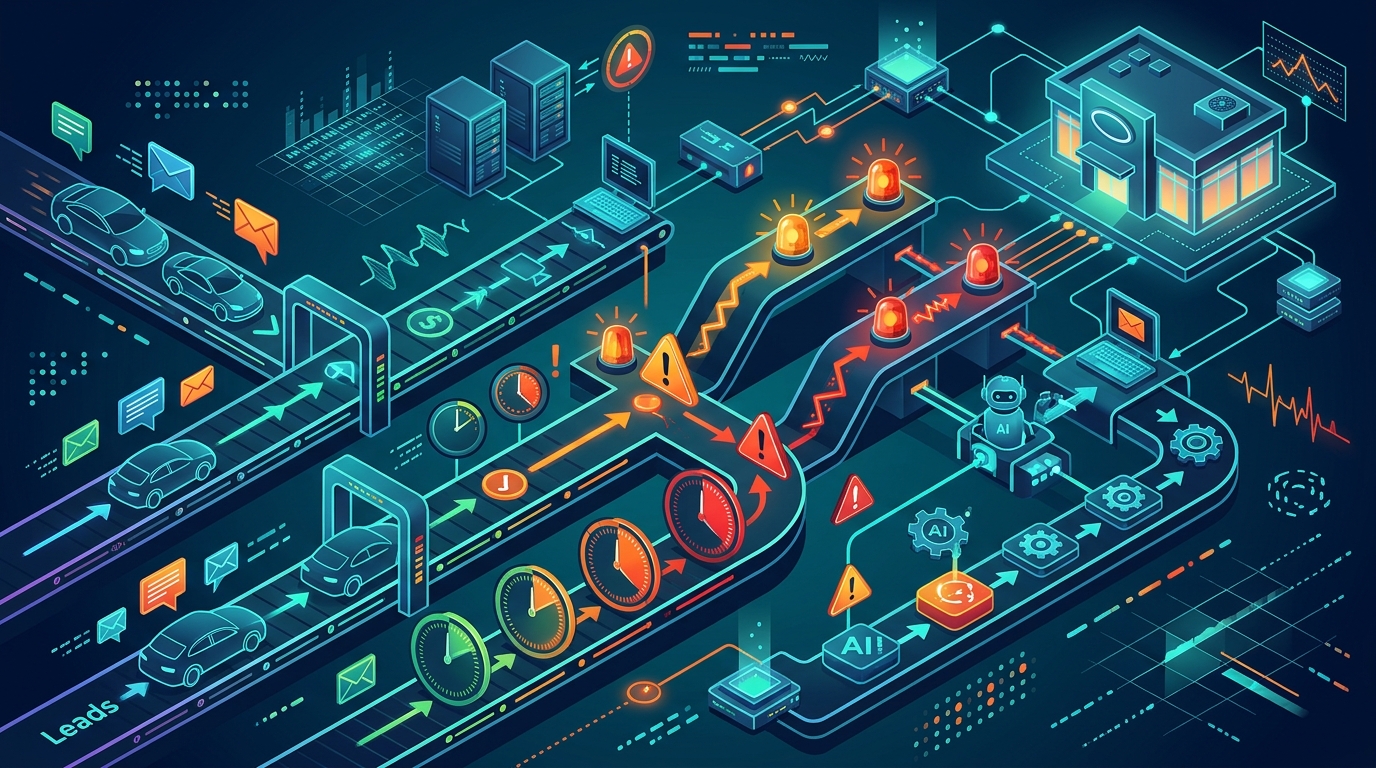
Escalation is the automated process of moving a lead to a higher-priority queue or a different handler when initial response thresholds are not met. In the automotive sector, this is not just a customer service tactic; it is a compliance mechanism. OEMs enforce strict response windows, and dealers must comply with these rules to avoid penalties. A robust escalation rule set defines exactly when a lead moves from a standard queue to a priority status.
For example, if an OEM requires a response within 5 minutes, the escalation rule might trigger at the 3-minute mark. This buffer allows the system to alert a human agent or deploy an AI responder before the timer expires. This distinction between the deadline and the trigger point is critical for maintaining a high quality of response.
Setting Tiered Triggers for Response Windows
Effective escalation relies on tiered triggers that account for the time of day and the source of the lead. A lead received at 2:00 AM requires a different escalation path than one received at 10:00 AM. Dealers should set up rules that distinguish between business hours and after-hours periods. During business hours, a missed first response might trigger a notification to a specific BDC agent. After hours, the same trigger should activate an automated AI response to capture the customer's intent immediately.
Consider a specific scenario: a customer submits a web form at 11:45 PM. The OEM timer is 5 minutes. A tiered rule should trigger an AI chat or text response at 11:46 PM. This immediate interaction keeps the customer engaged while the human team prepares to take over the next morning. This structure ensures that the dealer complies with the timer while providing a personalized experience.
The Role of AI in the Escalation Chain
Artificial intelligence is the first line of defense in any escalation chain. AI is capable of handling the initial contact instantly, regardless of the time of day. When a lead is flagged for escalation, the AI should not just send a generic "we received your message" text. It should engage in a two-way conversation to qualify the lead and gather necessary details. This interaction buys time for the human team to prepare a more detailed response.
However, the escalation rule must also define when the AI hands off to a human. If the customer asks a complex question that the AI cannot answer, the system should flag the lead for immediate human review. This hybrid approach ensures that the dealer meets the OEM's speed requirements while maintaining the quality of the conversation. The goal is to use AI for speed and humans for depth.
Monitoring Compliance and Visibility
Setting rules is only half the battle; dealers must also have visibility into how those rules are performing. Compliance is the dealer's responsibility to meet OEM standards, and this requires constant monitoring. Dealers should use dashboards that track the percentage of leads that triggered an escalation and the final response time. If a specific agent or channel consistently triggers escalations, the dealer can identify training gaps or process bottlenecks.
For instance, if a significant portion of leads from a specific social media platform are triggering escalations, the dealer knows that the current workflow for that channel is insufficient. This data-driven approach allows the dealer to refine their escalation rules over time. It transforms compliance from a reactive chore into a proactive strategy for improving overall lead management.
Why Dealers Choose Better Car People
Dealerships choose Better Car People because it combines the speed of AI with the skill of live agents to ensure 24/7/365 coverage. This platform is designed to handle OEM response-timer compliance automatically, covering nights, weekends, and holidays when human teams are offline. By using Better Car People, dealers can rest assured that every lead receives a timely, high-quality response, regardless of when it arrives. The system monitors timers in real-time and triggers the appropriate escalation path, ensuring that no lead is missed and no penalty is incurred. For additional details, review the Better Car People About page.
Key Takeaways
Automated Lead Movement
Escalation moves leads to higher-priority handlers when response thresholds are at risk. This structured approach prevents missed customer inquiries across digital channels. It keeps dealership workflows organized and timely.
Tiered Trigger Rules
Tiered triggers account for the specific time of day leads arrive. AI handles after-hours inquiries while human agents manage daytime leads. This balance protects team capacity during working hours.
Interactive AI Qualification
AI should engage in two-way conversations to qualify incoming leads. This interaction gathers important customer details before team members step in. It buys critical time for human staff to respond.
Operational Performance Visibility
Dealers must monitor escalation frequency to identify operational bottlenecks. Spotting recurring issues highlights specific coaching and training needs. Data oversight ensures process improvements take hold over time.
Dealer Compliance Focus
Compliance is the dealer's responsibility to meet OEM response standards. Regular visibility into response times prevents costly OEM infractions. Maintaining compliant timing safeguards dealership standing.
Round-the-Clock Coverage
Better Car People provides the infrastructure to automate lead escalation checks. Continuous 24/7/365 coverage protects timer compliance across nights and weekends. Consistent support prevents leads from falling through the cracks.
Frequently Asked Questions
What is the primary purpose of an escalation rule in a dealership?
The primary purpose is to ensure that no lead is left unattended when the initial response window is at risk of expiring. It acts as a safety net that triggers immediate action, either through AI or a human agent, to meet OEM compliance requirements.
How should dealers handle leads received after business hours?
Dealers should use AI to handle after-hours leads immediately. The escalation rule should trigger an AI response that engages the customer in a conversation, capturing their intent and providing a timely response to satisfy the OEM timer.
What is the difference between compliance and enforcement in this context?
Compliance is the dealer's role in meeting the OEM's rules and standards. Enforcement is the OEM's role in monitoring and penalizing dealers who fail to meet those standards. Dealers must focus on compliance to avoid penalties.
How often should dealers review their escalation rules?
Dealers should review their escalation rules quarterly or whenever there is a significant change in lead volume or OEM requirements. Regular reviews ensure that the rules remain effective and aligned with current business goals.
Can AI fully replace human agents in the escalation process?
No, AI should not fully replace human agents. AI is best used for initial contact and qualification, while human agents should handle complex conversations and closing. The escalation process should define a clear handoff point between AI and humans. Learn more about effective communication through customer support best practices.