

Automotive OEM Compliance: Mastering Lead Response Timers and Brand Guidelines
Automotive OEM compliance is the practice of ensuring every customer interaction meets strict manufacturer response time limits and brand communication standards. Dealerships face severe financial penalties and reputation damage when their teams fail to meet these rigid requirements. Better Car People solves this by combining AI speed with human expertise, ensuring your dealership meets OEM timers and brand guidelines automatically without manual policing.
The Cost of Manual Compliance
Manual lead response processes are inherently fragile. When a dealership relies on human agents to monitor timers and adhere to brand scripts, the system fails under pressure. High-volume periods, such as holiday weekends or new model launches, overwhelm BDC teams. Agents miss calls, delay texts, or use informal language that violates OEM brand guidelines.
These failures are not just administrative errors. They result in direct financial penalties. OEMs deduct points from dealer scorecards for every missed timer. Low scorecard points reduce dealer incentives and can jeopardize franchise agreements. Furthermore, inconsistent brand communication erodes customer trust. A customer who receives a generic, slow, or off-brand response is less likely to book an appointment or purchase a vehicle.
Better Car People addresses this by removing the human element from the initial compliance check. Our platform ensures that the first response is always fast, on-brand, and compliant. This shifts the team's focus from policing timers to building genuine customer relationships.
Understanding OEM Timers and Brand Guidelines
OEM timers are strict deadlines set by manufacturers for responding to customer inquiries. These timers vary by channel and urgency. For example, a phone call might require a callback within five minutes, while an email might allow for a response within one hour. Brand guidelines dictate the tone, vocabulary, and structure of the communication. They ensure that every dealership represents the manufacturer's image consistently.
The Difference Between Speed and Quality
Speed alone is not enough. A response sent in ten seconds that uses slang or fails to address the customer's specific question is a compliance failure. OEMs evaluate both the timestamp and the content. The response must be fast and high-quality. It must acknowledge the customer's specific interest, use approved terminology, and guide them toward the next step, such as booking a test drive.
Channel-Specific Requirements
Each communication channel has distinct rules. Phone calls require immediate human connection. Text messages allow for slightly longer response times but demand brevity. Emails require detailed, structured responses. Chat interactions need real-time engagement. Dealerships often struggle to maintain consistent compliance across all these channels simultaneously. A system that handles one channel well may fail in another.
SLA Escalation Rules
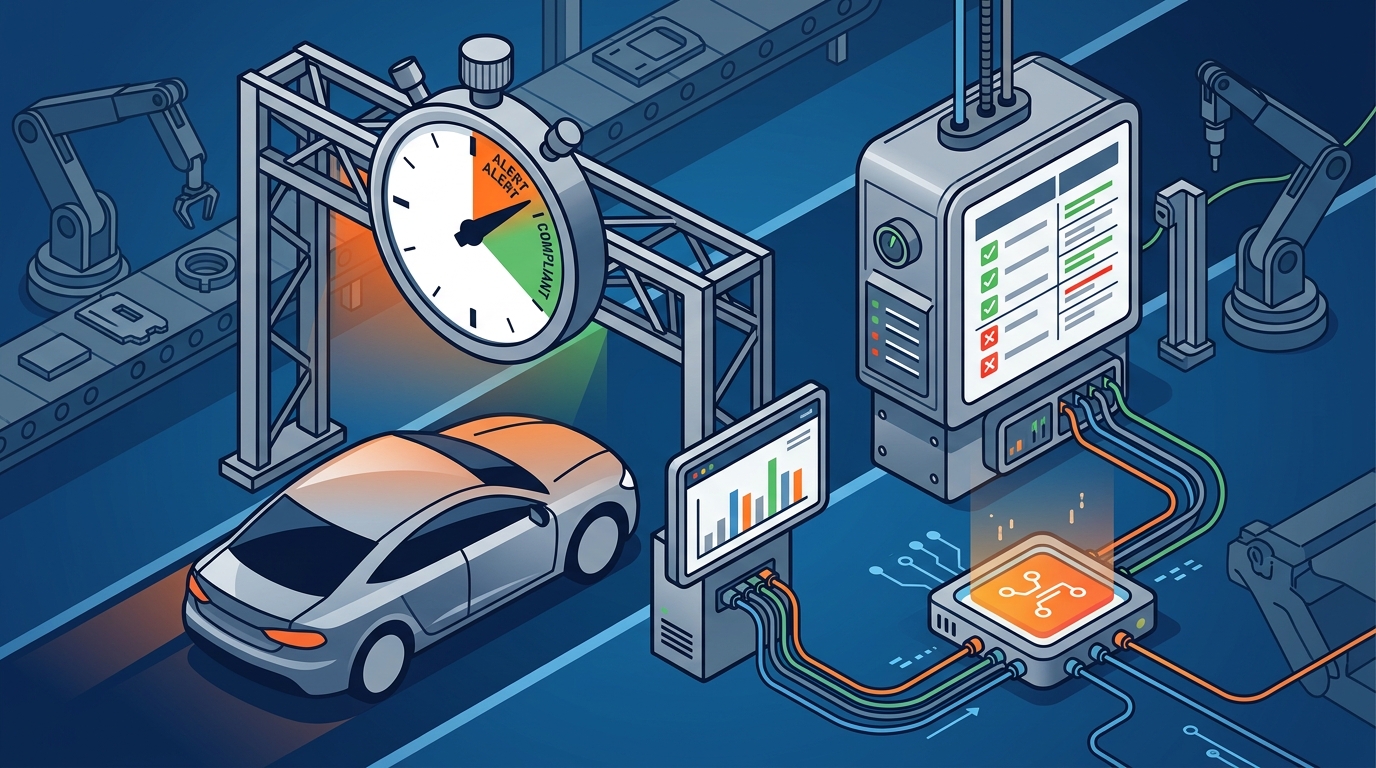
Service Level Agreement (SLA) escalation rules are predefined protocols that trigger when a lead response approaches or exceeds the OEM timer limit. These rules ensure that no lead is left unattended. When a timer hits a specific threshold, the system automatically escalates the lead to a higher-priority queue or a specific agent. This prevents the lead from aging out of the compliance window.
Defining the Escalation Triggers
Effective escalation rules start with clear triggers. For a five-minute phone callback timer, the system might trigger an alert at three minutes. This alert notifies the BDC team that the timer is about to expire. If the call is not answered by four minutes, the system can automatically send a text or email to the customer, acknowledging the delay and promising a callback. This multi-channel approach ensures the customer feels valued even if the primary channel fails.
Automated Handoffs
When an escalation occurs, the system must hand off the lead seamlessly. The receiving agent should have full context of the previous interactions. They should know what the customer asked, what was already said, and how much time remains. This context prevents the customer from having to repeat themselves. It also allows the agent to respond with urgency and accuracy. Better Car People's platform manages these handoffs automatically, ensuring that the human agent steps in with all the necessary information to close the loop.
Automated First Response Strategies
Automated first response is the use of AI to instantly acknowledge a customer's inquiry. This response is not a generic bot reply. It is a personalized, on-brand message that confirms receipt and sets expectations. For phone calls, this might be an automated text sent immediately after the call ends. For web chats, it is an instant AI response that answers common questions or books an appointment.
The Role of AI in Speed
AI provides the speed that human teams cannot match. It responds in seconds, not minutes. This ensures that the OEM timer is met with a large buffer. The AI response is crafted to align with OEM brand guidelines. It uses the correct tone, avoids prohibited terms, and guides the customer toward the desired action. This initial touchpoint builds trust and keeps the customer engaged while a human agent prepares to take over.
Human-AI Collaboration
The goal is not to replace humans with AI. It is to use AI to handle the compliance-critical first response. The human agent then steps in to provide the nuanced, empathetic interaction that builds long-term loyalty. Better Car People's Collaborative Intelligence model ensures that the AI and the human work together. The AI handles the timer and the brand check. The human handles the relationship and the sale. This division of labor ensures compliance without sacrificing customer experience.
Brand Voice Enforcement
Real-Time Content Scanning
Modern AI systems can scan text in real-time. They check for prohibited words, incorrect formatting, and off-brand tone. If a response violates a guideline, the system can flag it for review or automatically correct it. This ensures that every message sent to a customer meets OEM standards. It removes the risk of a human agent making a costly mistake under pressure.
Consistency Across Channels
Brand voice must be consistent across all channels. A customer who interacts with a dealership via text, email, and phone should experience the same brand personality. Automated systems ensure this consistency. They apply the same brand rules to every channel. This creates a unified brand experience that reinforces the manufacturer's image. It also simplifies compliance, as the dealership only needs to manage one set of brand rules rather than channel-specific variations.
Compliance Monitoring and Analytics
Compliance monitoring is the ongoing tracking of lead response performance against OEM standards. It involves measuring response times, brand adherence, and customer satisfaction. Analytics provide visibility into where the process is failing. They identify patterns, such as specific agents who consistently miss timers or channels that have high failure rates. This data allows dealerships to make targeted improvements.
Visibility Fuels Performance
Without visibility, dealerships cannot improve. They do not know which leads are at risk or which agents need coaching. Better Car People's BDC Insights provide this visibility. They show exactly what is happening with every lead. Managers can see response times, brand compliance scores, and conversion rates. This data-driven approach allows them to coach their teams effectively. It shifts the focus from punishment to improvement.
Continuous Improvement
Compliance is not a one-time fix. It is a continuous process. OEM guidelines change. Customer behavior evolves. Dealerships must adapt their systems to stay compliant. Automated monitoring provides the data needed for this adaptation. It highlights trends and identifies areas for optimization. By continuously analyzing performance, dealerships can refine their processes and maintain high compliance scores over time. according to NIST SP 800
Key Takeaways
- Manual compliance is fragile and prone to failure under high volume.
- OEM timers and brand guidelines require both speed and quality.
- SLA escalation rules prevent leads from aging out of compliance windows.
- Automated first responses ensure timers are met with a large buffer.
- AI can enforce brand voice in real-time across all channels.
- Compliance monitoring provides the visibility needed for continuous improvement.
- Better Car People combines AI speed with human expertise to ensure compliance.
- Automated systems shift the team's focus from policing to relationship building.
Frequently Asked Questions
What are the most common OEM compliance failures?
The most common failures are missed response timers and off-brand language. Dealerships often struggle to respond quickly enough during high-volume periods. They also frequently use informal language that violates manufacturer guidelines. These failures result in financial penalties and reduced customer trust.
How does AI help with brand voice enforcement?
AI scans responses in real-time for prohibited terms and off-brand tone. It ensures that every message adheres to OEM guidelines before it is sent. This removes the risk of human error and ensures consistency across all communication channels.
Can automated systems handle phone calls?
Yes, automated systems can handle the initial acknowledgment of phone calls. They can send an immediate text or email to the customer, confirming receipt and promising a callback. This ensures the OEM timer is met while a human agent prepares to take over the conversation.
What is the role of SLA escalation rules?
SLA escalation rules trigger alerts or actions when a lead response approaches the OEM timer limit. They ensure that no lead is left unattended. These rules can notify agents, send automated messages, or reassign leads to higher-priority queues.
How do I measure compliance performance?
Compliance performance is measured by tracking response times, brand adherence scores, and customer satisfaction metrics. Analytics tools provide visibility into these metrics, allowing dealerships to identify areas for improvement and coach their teams effectively.
Does Better Car People integrate with existing CRM systems?
Yes, Better Car People integrates with major CRM systems used by dealerships. This ensures that all lead data and compliance metrics are centralized and accessible. The integration allows for seamless data flow between the AI platform and the dealership's existing tools.