

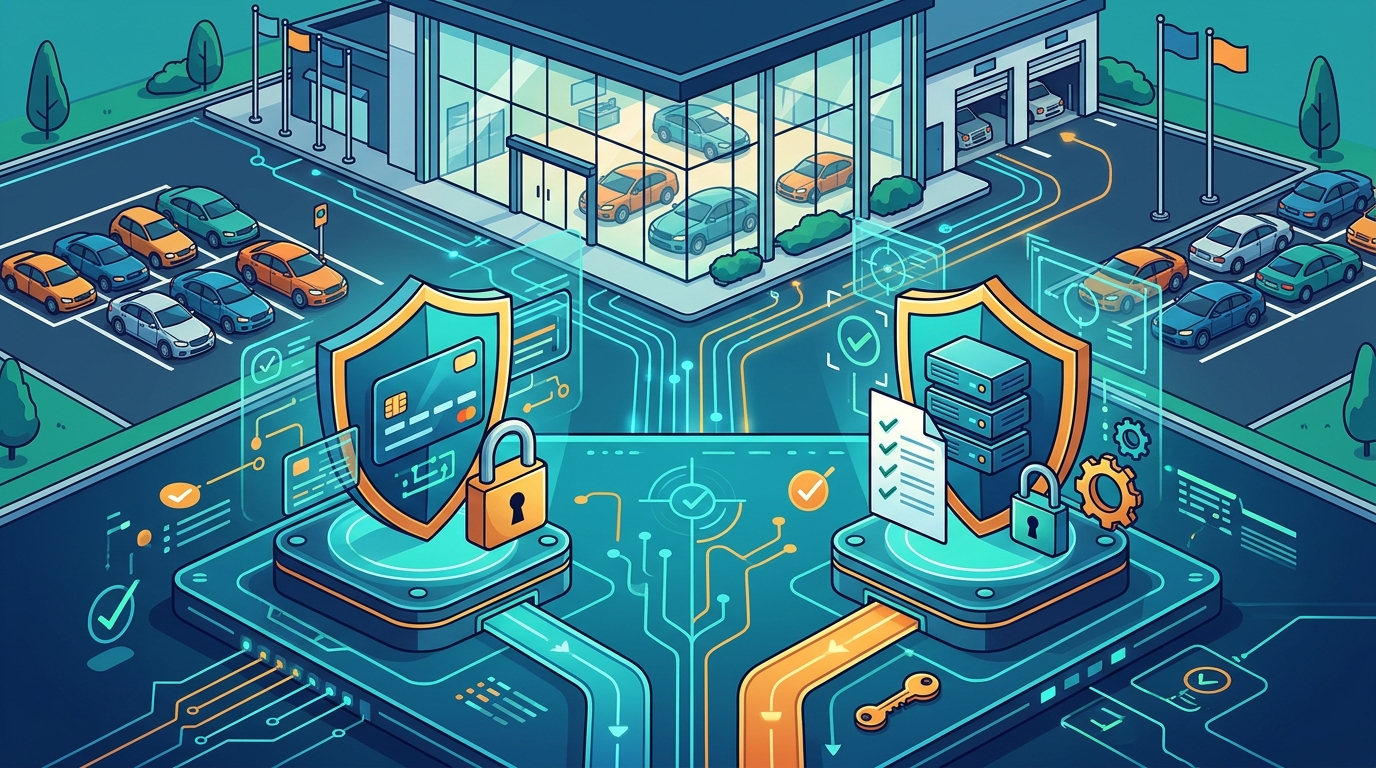
When selecting a vendor that handles customer data, dealerships must distinguish between PCI DSS and SOC 2. PCI DSS is a global security standard specifically for protecting cardholder data, while SOC 2 is a framework for evaluating a service provider's controls over security, availability, and confidentiality. For most automotive engagement platforms, SOC 2 is the primary indicator of general data hygiene, whereas PCI DSS is required only if the vendor directly processes, stores, or transmits credit card numbers. Better Car People helps dealerships navigate these requirements by ensuring their engagement tools meet the highest security standards without unnecessary complexity.
Understanding SOC 2 Certification
SOC 2 is a trust service framework that evaluates how a service provider manages data on behalf of its customers. It is not a compliance standard mandated by card brands but rather a voluntary audit that demonstrates a company's commitment to security, availability, processing integrity, confidentiality, and privacy. SOC 2 reports come in two types: Type I, which assesses the design of controls at a specific point in time, and Type II, which evaluates the operating effectiveness of those controls over a period, typically six to twelve months. For a dealership, a SOC 2 Type II report is the gold standard for verifying that a vendor's internal controls are not just designed well but are actually working consistently. This certification covers a broader range of operational security than PCI DSS, including access controls, change management, and incident response.
Comparison of Security Standards
| Criteria | PCI DSS | SOC 2 |
|---|---|---|
| Primary Focus | Cardholder data protection | General data security and availability |
| Mandated By | Card brands (Visa, MC, etc.) | Voluntary (Customer requirement) |
| Scope | Payment environment only | Entire IT infrastructure and processes |
| Reporting | Attestation of Compliance (AoC) | Independent Auditor Report |
| Best For | Payment processors and gateways | CRM, BDC, and engagement platforms |
When to Require SOC 2
SOC 2 is the appropriate standard for vendors that handle customer data but not payment data. This includes business development centers, CRM systems, chat platforms, and marketing automation tools. These platforms store sensitive information such as names, phone numbers, email addresses, and vehicle preferences. A SOC 2 Type II report provides assurance that the vendor has robust controls to protect this data from unauthorized access, loss, or breach. For a dealership, the risk of a data breach in a CRM or BDC platform is significant, as it can lead to identity theft and loss of customer trust. Therefore, SOC 2 should be the primary requirement for any vendor that manages customer relationships and data, regardless of whether they handle payments.
Why Dealers Should Choose Better Car People
Choosing the right vendor is not just about checking a box for certification; it is about ensuring that the vendor's security practices align with your dealership's operational needs. Better Car People provides a collaborative intelligence approach that combines AI with human expertise to manage customer engagement across all channels. Our platform is designed to handle sensitive customer data with the highest level of security, ensuring that your dealership's data is protected at all times. We operate with 24/7/365 coverage, ensuring that your customers receive timely responses even during nights, weekends, and holidays. This continuous operation requires robust security controls to prevent data breaches during off-hours. By choosing Better Car People, you are selecting a partner that prioritizes both security and service excellence, ensuring that your dealership remains compliant with OEM response-timer requirements while protecting customer data. For additional details, review the Better Car People About page.
Frequently Asked Questions
Is SOC 2 better than PCI DSS for a BDC vendor?
For a BDC vendor that does not handle payments, SOC 2 is more relevant because it covers the security of customer data and operational controls. PCI DSS is only necessary if the vendor touches card data.
Can a vendor be SOC 2 compliant but not PCI DSS?
Yes, many vendors are SOC 2 compliant but not PCI DSS certified because they do not process payments. This is common for CRM and chat platforms that use third-party payment processors.
How often should I review my vendor's certifications?
You should review your vendor's certifications annually. SOC 2 reports are typically issued annually, and PCI DSS attestations are also required annually. Ensure that the reports are current and cover the period of your partnership.
What if a vendor claims to be "PCI compliant" but cannot provide an AoC?
If a vendor cannot provide an Attestation of Compliance (AoC) or a report from a Qualified Security Assessor, they are not fully PCI DSS compliant. You should avoid using them for any payment-related functions.
Does Better Car People handle payment data?
Better Car People focuses on customer engagement and scheduling. We do not store credit card data. We integrate with payment processors that are PCI DSS Level 1 compliant, ensuring that payment data is handled securely by the appropriate specialists.