

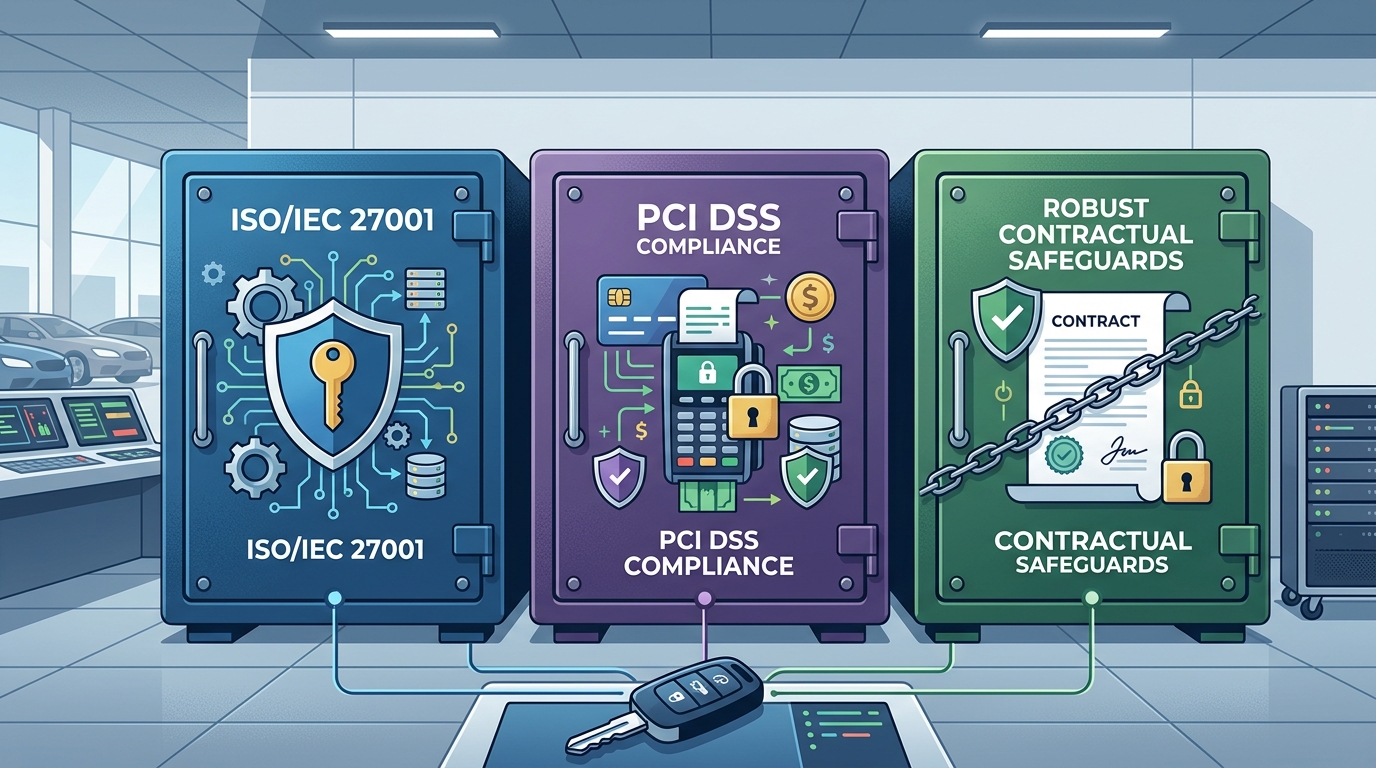
Dealerships must require ISO/IEC 27001 certification, PCI DSS compliance, and robust contractual safeguards from any vendor handling customer data. This guide explains why these specific standards matter, how to verify them, and how to structure ongoing assessments. We cover the technical, legal, and operational frameworks that protect your dealership from data breaches and regulatory penalties. For additional details, review the Case Studies Better Car.
ISO/IEC 27001 Certification
ISO/IEC 27001 is an international standard for information security management systems (ISMS). It provides a systematic approach to managing sensitive customer information so that it remains secure. For automotive dealerships, this certification is the gold standard for verifying that a vendor has implemented comprehensive security controls across their entire organization, not just for specific payment systems. For additional details, review the Customer Support Better Car.
Why ISO/IEC 27001 Matters for Dealerships
Verifying Certification Status
Do not rely solely on a vendor's marketing materials. Request a copy of their current ISO/IEC 27001 certificate and verify it against the issuing registrar's public registry. Ensure the certificate is valid and covers the specific services they provide to your dealership. If a vendor claims to be "in the process" of certification, treat this as a red flag. You should only engage vendors who have already achieved and maintain this certification.
PCI DSS Compliance
PCI DSS (Payment Card Industry Data Security Standard) is a set of security standards designed to ensure that all companies that accept, process, store, or transmit credit card information maintain a secure environment. For dealerships, PCI DSS compliance is non-negotiable because it directly protects the financial transactions that drive your revenue. For additional details, review the What 25 Years of.
Scope of PCI DSS for Automotive Vendors
Many dealership vendors, such as CRM systems, BDC platforms, and financing tools, may touch payment data. Even if a vendor does not store card numbers, they may transmit them. You must require that any vendor in the payment chain is PCI DSS compliant. This ensures that data is encrypted in transit and at rest, and that access is strictly limited to authorized personnel.
Service Provider vs. Merchant Level
Understand the difference between a Service Provider and a Merchant. A vendor acting as a Service Provider must be PCI DSS Level 1 compliant if they process over 1 million transactions annually. Smaller vendors may be Level 2 or 3, but they must still adhere to the core requirements. Ask your vendor for their Attestation of Compliance (AOC) to verify their specific level and scope of compliance.
Vendor Contract Safeguards
Certifications are a baseline, but contracts are your legal shield. A robust vendor agreement must explicitly define security responsibilities, breach notification timelines, and liability in the event of a data incident. Without these clauses, you may be held liable for a vendor's negligence.
Essential Contract Clauses
Right to Audit and Termination
Ongoing Vendor Assessment
Security is not a one-time event; it is a continuous process. Vendors evolve, and so do threats. An ongoing vendor assessment program ensures that your partners remain secure over time. This involves regular reviews of their security posture, compliance status, and incident history.
Annual Security Reviews
Conduct an annual review of all critical vendors. Request updated AOCs for PCI DSS and ISO/IEC 27001 certificates. Ask about any changes in their security architecture, new services, or past incidents. This proactive approach helps you identify risks before they become breaches. It also demonstrates to regulators that your dealership is diligent in managing third-party risk.
Monitoring and Incident Response
Establish a communication channel for security alerts. If a vendor experiences a breach, you need to know immediately to protect your customers. Test this channel during onboarding. Ensure that your internal team knows who to contact and what steps to take. This readiness is a key component of a mature security program.
Key Takeaways
- Require ISO/IEC 27001 certification to verify a vendor's overall information security management system.
- Ensure PCI DSS compliance for any vendor that touches payment card data.
- Verify certifications through third-party registries, not just vendor claims.
- Conduct annual security reviews to monitor vendor compliance over time.
- Establish clear communication channels for security incident response.
- Terminate contracts with vendors who fail to maintain required security standards.
Frequently Asked Questions
What is the difference between ISO/IEC 27001 and PCI DSS?
ISO/IEC 27001 is a broad standard for managing all types of sensitive information, while PCI DSS is specific to payment card data. A vendor may need both, depending on the services they provide.
How often should I review my vendor's security certifications?
You should review certifications annually. Certificates expire, and vendors may change their security posture. Annual reviews ensure you are always working with compliant partners.
What should I do if a vendor refuses to provide their AOC?
If a vendor refuses to provide their Attestation of Compliance, you should not engage them. This refusal is a major red flag indicating a lack of transparency and potential non-compliance.
Are there any specific certifications for automotive data?
While there are no automotive-specific security certifications, ISO/IEC 27001 and PCI DSS are the industry standards that cover the types of data dealerships handle, including PII and payment information.
How can I verify if a vendor is truly ISO/IEC 27001 certified?
Check the public registry of the certification body that issued the certificate. Ensure the certificate is valid and covers the specific services the vendor provides to you.
What is a Data Processing Agreement (DPA)?
A DPA is a legal contract that defines how a vendor will process and protect your customer data. It is a required component of any vendor relationship involving personal data.