

Automating Connected Car Alert Conversion to Service Appointments
Dealerships can automatically convert connected car alerts into scheduled service appointments by integrating OEM telematics data with AI-driven communication workflows. This process triggers immediate, personalized outreach via text, chat, or email, allowing customers to book appointments instantly. Better Car People provides the infrastructure to bridge the gap between vehicle health signals and booked service revenue.
The Telematics Gap in Modern Dealerships
Connected car technology generates a continuous stream of vehicle health data, yet many dealerships fail to capitalize on it. A connected car alert is a digital signal sent from a vehicle to the manufacturer indicating a specific mechanical issue or maintenance need. Without a direct pipeline to the dealership, these alerts often sit in OEM portals where they are ignored by customers who do not actively check their accounts.
The result is a significant revenue leak. When a vehicle reports a fault code or a maintenance reminder, the customer may not know how to interpret it. If the dealership does not reach out within minutes, the customer may delay service or take the vehicle to a competitor. This delay reduces the urgency of the repair and lowers the likelihood of a sale. Dealers must move from passive data collection to active engagement to capture this value.
Manual handling of these alerts is inefficient. Service advisors cannot monitor thousands of OEM portals simultaneously. They also lack the context to explain complex technical codes to customers in real-time. This creates a service gap where the dealership appears unresponsive to the vehicle's actual needs. Automation is the only scalable solution to close this gap.
How Automated Workflows Bridge the Gap
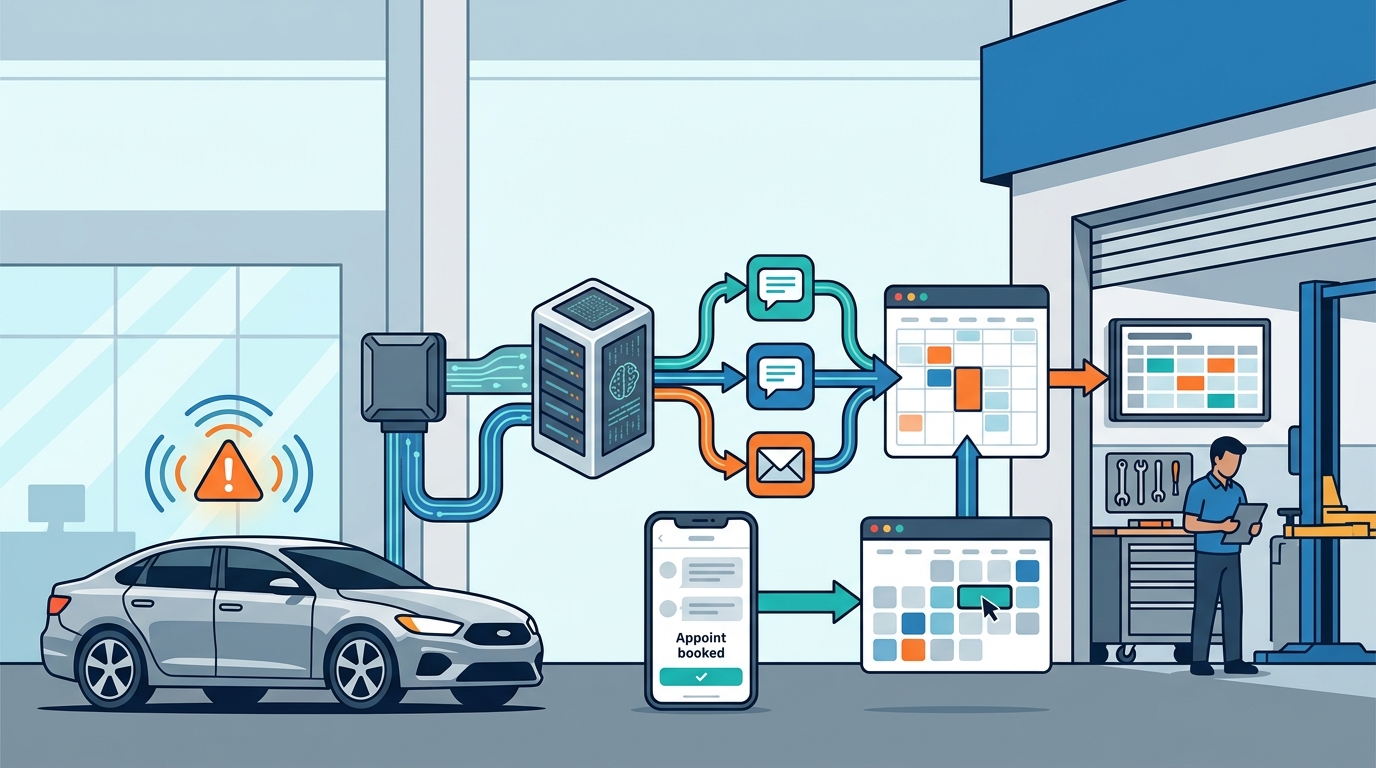
Automated conversion relies on a seamless data pipeline that connects OEM telematics systems to dealership communication tools. When a vehicle sends an alert, the system immediately identifies the owner and triggers a multi-channel outreach sequence. This ensures the customer receives a notification on their preferred channel, whether that is text message, email, or live chat.
Speed is the primary driver of conversion. Customers are most likely to book an appointment when they first receive the alert. As time passes, the perceived urgency decreases. Automated systems respond in seconds, whereas manual processes take hours or days. This immediate response captures the customer's attention while the issue is fresh in their mind. It also demonstrates that the dealership is proactive and attentive to their vehicle's health.
The Role of AI in Personalizing Outreach
Artificial intelligence enhances the effectiveness of automated alerts by personalizing the communication. AI analyzes the customer's history, preferences, and past behavior to tailor the message. It determines the best time to send the notification and the most appropriate tone. This personalization increases the open rate and the likelihood of a booking.
Better Car People utilizes this collaborative intelligence to manage these interactions. The platform ensures that every alert is addressed with the right message at the right time. It removes the friction from the booking process, allowing customers to schedule service with minimal effort. This seamless experience builds trust and encourages repeat business.
Measuring the Revenue Impact of Alert Conversion
Dealerships can measure the success of their alert conversion efforts through specific key performance indicators. The primary metric is the conversion rate, which tracks the percentage of alerts that result in a booked appointment. A high conversion rate indicates that the outreach is effective and the customers are responsive. Dealers should aim to improve this rate continuously by refining their messaging and timing.
Another critical metric is the time-to-booking. This measures how quickly a customer schedules an appointment after receiving an alert. Shorter times indicate higher urgency and better customer engagement. Dealers can use this data to identify bottlenecks in their process. If the time-to-booking is long, it may indicate that the message is not compelling enough or that the booking link is difficult to use.
Revenue per alert is the ultimate measure of success. This metric calculates the average value of the service work generated from each connected car alert. It helps dealers understand the financial return on their automation investment. By tracking these metrics, dealers can optimize their strategies and maximize their service department revenue. The data provides a clear picture of the value of proactive engagement.
Strategies for Successful Implementation
Successful implementation requires a strategic approach to integrating telematics data with communication tools. Dealers should start by auditing their current data sources. They need to ensure that they have access to the relevant OEM telematics feeds. This may involve partnering with manufacturers or using third-party data aggregators. The goal is to create a unified view of all vehicle health signals.
Next, dealers must define their outreach strategy. They should decide which alerts warrant immediate contact and which can be handled with a standard reminder. Not every alert requires the same level of urgency. A critical safety issue demands immediate attention, while a routine maintenance reminder can be scheduled for a later date. This tiered approach prevents customer fatigue and ensures that important messages are not lost in the noise.
Finally, dealers should monitor and refine their processes. They should regularly review their conversion rates and customer feedback. This allows them to identify areas for improvement and adjust their strategies accordingly. Continuous optimization is key to maintaining high performance. By staying agile and responsive, dealers can stay ahead of the competition and maximize their service revenue.
Key Takeaways
- Connected car alerts represent a significant revenue opportunity that is often underutilized by dealerships.
- Automated workflows enable immediate, personalized outreach that captures customer attention while urgency is high.
- AI personalization increases engagement by tailoring messages to individual customer preferences and history.
- Speed is the primary driver of conversion, with automated systems responding in seconds rather than hours.
- Key performance indicators such as conversion rate and time-to-booking help measure the success of alert conversion efforts.
- Strategic implementation requires a tiered approach to alert handling to prevent customer fatigue.
- Better Car People provides the infrastructure to bridge the gap between vehicle health signals and booked service revenue.
Frequently Asked Questions
What is a connected car alert?
A connected car alert is a digital signal sent from a vehicle to the manufacturer indicating a specific mechanical issue or maintenance need.
How do dealerships receive these alerts?
Dealerships receive these alerts through integrations with OEM telematics systems or third-party data aggregators that provide access to vehicle health data.
Why is speed important in responding to alerts?
Speed is important because customers are most likely to book an appointment when they first receive the alert. As time passes, the perceived urgency decreases.
Can AI handle the initial conversation with customers?
Yes, AI can handle the initial conversation by answering questions, providing cost estimates, and offering appointment slots. It can escalate to a human agent if needed.
What metrics should dealerships track?
Dealerships should track conversion rate, time-to-booking, and revenue per alert to measure the success of their alert conversion efforts.
How does Better Car People help with this process?
Better Car People provides the infrastructure to bridge the gap between vehicle health signals and booked service revenue by automating outreach and personalizing communication.
Conclusion
Automating the conversion of connected car alerts into service appointments is a critical strategy for modern dealerships. By leveraging AI and automated workflows, dealers can capture revenue that would otherwise be lost. This approach ensures that customers receive timely, personalized communication that addresses their vehicle's needs. Better Car People offers the tools and expertise to implement this strategy effectively. For additional details, review the Connected Car Response solution.