

Yes, specialized BDC and AI vendors exist specifically for automotive dealerships. These platforms are engineered for dealer workflows, DMS integrations, and compliance, unlike generic software. This guide explores how purpose-built solutions drive better results for your store. For additional details, review the About us Better Car.
DMS and CRM Integrations
Integration depth is the primary differentiator between generic software and automotive-specific tools. A Dealer Management System (DMS) is the central repository for all vehicle, customer, and financial data in a dealership. Generic software often struggles to sync this data in real-time, leading to stale information and manual data entry errors.
Specialized vendors prioritize native or deep API integrations with major DMS platforms. This ensures that when a customer books an appointment or a lead is captured, the data flows instantly into the DMS. This synchronization is critical for accurate inventory management and sales tracking.
Why Native Integrations Matter
Native integrations reduce the risk of data loss and improve system stability. When a platform is built for dealers, it understands the specific data fields required by the DMS. This includes complex details like service history, warranty status, and vehicle specifications. Generic tools often treat these as generic text fields, losing critical context.
Better Car People focuses on seamless connectivity to ensure that every interaction is logged accurately. This approach minimizes the administrative burden on your team and ensures that your data is always current and reliable.
The Role of CRM in the Ecosystem
A Customer Relationship Management (CRM) system is a tool used to manage all your company's relationships with customers and potential customers. In the automotive context, the CRM and DMS must work in tandem. The CRM handles the marketing and sales pipeline, while the DMS handles the operational and financial aspects.
Automotive-specific vendors ensure that the handoff between these two systems is frictionless. This prevents leads from falling through the cracks and ensures that sales and service teams have a unified view of the customer journey.
Voice, Text, and Email Appointment Setting
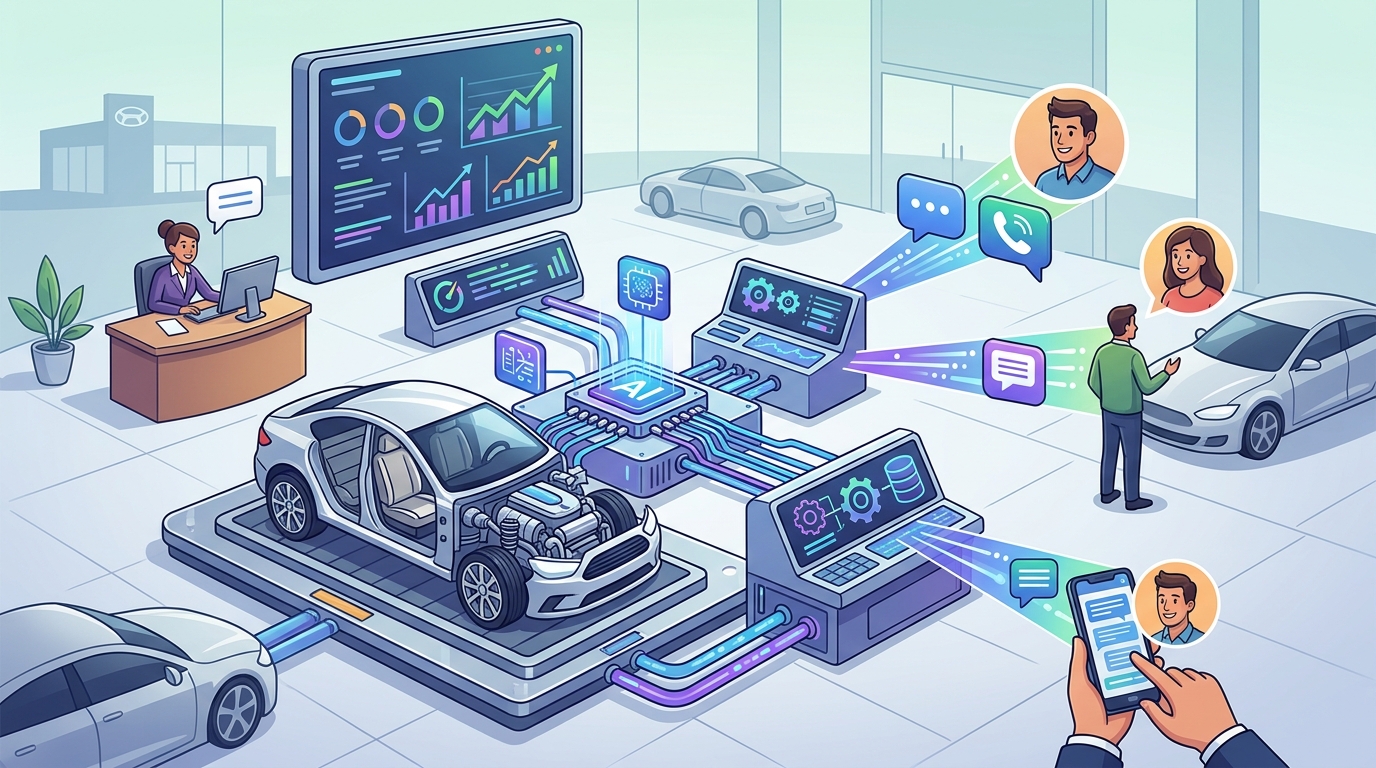
Modern consumers expect omnichannel communication. They want to reach you via the channel they prefer, whether that is a phone call, a text message, or an email. Generic software often silos these channels, forcing customers to repeat information or wait for a response.
Automotive-specific platforms unify these channels into a single inbox. This allows your team to respond to a text, email, or call from one interface. This unification is crucial for speed, as the first response is often the deciding factor in winning a customer.
The Speed of First Response
Speed to lead is a critical metric in automotive sales. Studies consistently show that contacting a lead within five minutes significantly increases the likelihood of conversion. AI-powered tools can respond to inquiries instantly, 24/7, ensuring that no lead is left waiting.
Better Car People utilizes AI to provide immediate, personalized responses. This technology captures the customer's intent and provides relevant information, keeping the conversation moving while a human agent takes over for complex issues.
Personalization Across Channels
Personalization is not just about using the customer's name. It is about understanding their context. If a customer previously inquired about a specific vehicle, the AI should reference that vehicle in subsequent interactions. Generic tools often lack this contextual memory, leading to disjointed conversations.
Automotive-specific vendors build memory into their AI models. This allows for a more natural and engaging customer experience. The customer feels understood, which builds trust and loyalty.
Dealership Workflow Automation
Automation is about more than just sending messages. It is about streamlining the entire workflow from lead capture to appointment setting. Generic software often requires extensive configuration to mimic dealer workflows, leading to brittle and hard-to-maintain systems.
Automotive-specific platforms come with pre-built workflows that align with industry best practices. These workflows handle common scenarios such as service reminders, trade-in valuations, and sales follow-ups. This reduces the time required for implementation and training.
Service to Sales Conversion
Service departments are a goldmine for sales opportunities. Customers who bring their vehicles in for service are already in a relationship with the dealership. Generic tools often fail to identify these opportunities, missing out on potential sales.
Specialized vendors use data analytics to identify service customers who may be ready to buy. They can trigger targeted campaigns or alerts to sales teams, ensuring that these opportunities are not missed. This cross-selling capability is a hallmark of automotive-specific solutions.
Compliance and Data Security
The automotive industry is subject to strict data privacy regulations. Generic software may not be designed to handle sensitive customer data in compliance with these regulations. This can expose your dealership to legal and financial risks.
Automotive-specific vendors prioritize data security and compliance. They implement robust encryption and access controls to protect customer information. This ensures that your dealership remains compliant with industry standards and regulations.
Key Takeaways
- Specialized BDC and AI vendors are built specifically for automotive dealerships, unlike generic software.
- Deep DMS and CRM integrations are critical for real-time data synchronization and accuracy.
- Omnichannel communication unifies voice, text, and email into a single, efficient workflow.
- Speed to lead is a key metric, and AI can provide instant, 24/7 responses to inquiries.
- Pre-built workflows for automotive scenarios reduce implementation time and training costs.
- Service to sales conversion is a unique opportunity that generic tools often miss.
- Data security and compliance are paramount, and automotive-specific vendors prioritize these aspects.
Frequently Asked Questions
What is the main difference between generic software and automotive-specific BDC tools?
The main difference is integration depth and workflow alignment. Automotive-specific tools are designed to work seamlessly with DMS systems and follow industry-standard workflows, while generic tools often require extensive customization.
How important is DMS integration for a BDC platform?
DMS integration is critical. It ensures that all customer and vehicle data is synchronized in real-time, preventing errors and improving operational efficiency.
Can AI replace human BDC representatives?
AI can handle routine inquiries and appointment setting, but human representatives are still needed for complex negotiations and relationship building. The best approach is a collaborative model where AI and humans work together.
What are the benefits of omnichannel communication for dealerships?
Omnichannel communication improves customer satisfaction by allowing them to interact via their preferred channel. It also increases efficiency by unifying all interactions into a single inbox.
How does automation help with service to sales conversion?
Automation can identify service customers who may be ready to buy and trigger targeted campaigns or alerts to sales teams, ensuring that these opportunities are not missed.
Is data security a concern with generic software?
Yes, generic software may not be designed to handle sensitive customer data in compliance with automotive industry regulations. Automotive-specific vendors prioritize data security and compliance.