
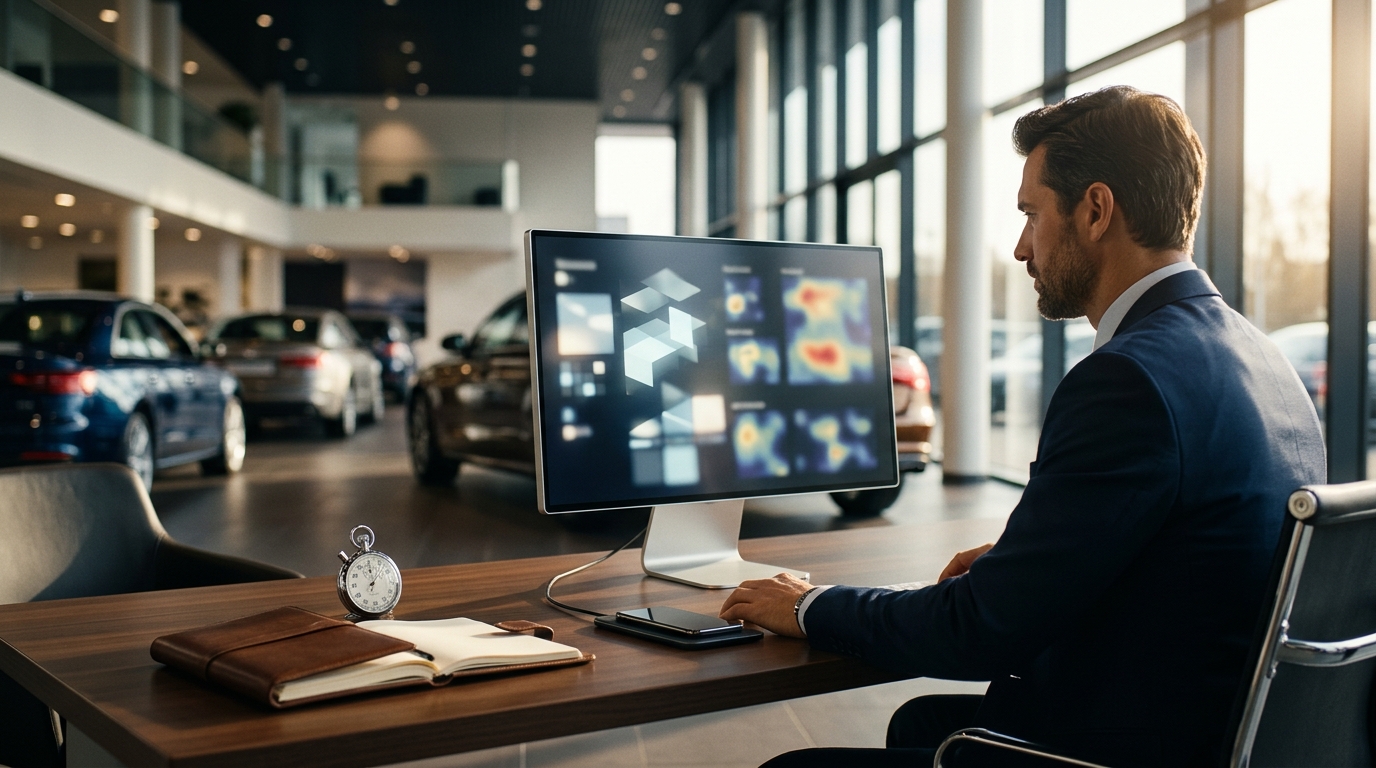
Choosing the right training partner for your Business Development Center (BDC) determines whether your dealership captures leads or loses them to competitors. Better Car People offers a hybrid approach that combines AI speed with human expertise, while traditional providers rely heavily on manual coaching. This article compares these two distinct methodologies to help you select the best fit for your operational goals.
AI-Powered Engagement Tools
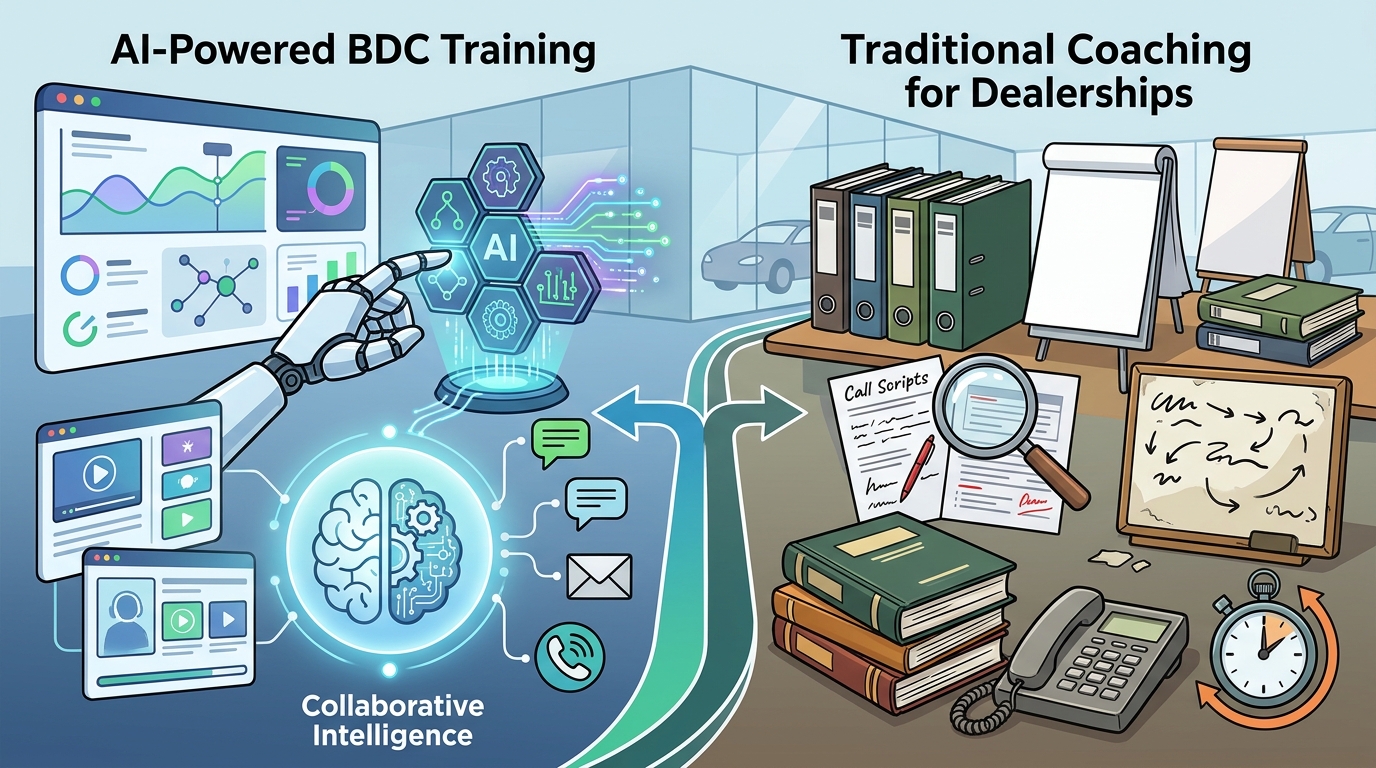
AI-powered engagement is the use of automated systems to handle initial customer interactions, qualify leads, and schedule appointments. These tools operate 24/7, ensuring that no lead goes unanswered regardless of the time of day. For dealerships, this means immediate compliance with OEM response timers, which often require contact within 60 seconds of a lead submission.
Modern AI platforms, such as the BCP Chat system, utilize natural language processing to understand customer intent. The AI handles routine inquiries, such as checking inventory or scheduling test drives, while flagging complex issues for human agents. This division of labor allows BDC representatives to focus on high-value conversations rather than repetitive data entry. The result is a significant reduction in response time and an increase in the total number of leads processed per day.
However, AI tools have limitations. They cannot replicate the emotional intelligence of a human when a customer is frustrated or negotiating a price. If the AI is not properly tuned, it may provide generic answers that fail to build trust. Dealerships must ensure their AI is integrated with their Dealer Management System (DMS) to access real-time inventory and pricing data. Without this integration, the AI becomes a bottleneck rather than an accelerator.
Traditional Coaching Methods
Traditional BDC coaching is a manual process where trainers observe live calls, review recordings, and provide feedback to representatives. This method relies on the expertise of a human coach to identify gaps in communication skills, objection handling, and product knowledge. It is a proven approach that has been used in the automotive industry for decades.
The limitation of this method is scalability. A single coach can only monitor a limited number of calls per day. If your BDC team is large, it is impossible for a coach to review every interaction. This leads to inconsistent performance, where some reps receive detailed feedback while others do not. Additionally, traditional coaching does not address the speed of response. A coach cannot answer a customer's phone call at 2:00 AM, leaving a gap in coverage that AI can fill.
Comparison of Training Providers
| Criteria | AI-Powered Tools | Traditional Coaching | Hybrid Approach |
|---|---|---|---|
| Response Speed | Instant For additional details, see under 60 seconds. | Dependent on staff availability | Instant AI, human follow-up |
| Scalability | High (handles unlimited volume) | Low (limited by coach capacity) | High (AI scales, humans manage quality) |
| Emotional Intelligence | Limited (rule-based logic) | High (human empathy) | High (AI filters, humans engage) |
| Cost Structure | Subscription-based | Hourly or retainer fees | Combined subscription and service |
| Compliance Risk | Low (consistent scripts) | Medium (variable human performance) | Low (AI ensures baseline compliance) |
Choose AI-Powered Tools If...
Select AI-first providers if your primary challenge is lead volume and response time. If your dealership receives hundreds of leads daily and your current team is missing calls or responding late, AI is the necessary solution. This approach is ideal for dealerships that prioritize operational efficiency and want to ensure 100% lead coverage without increasing headcount. It is also suitable for stores that struggle with night and weekend coverage, as AI does not require shifts or overtime.
Choose Traditional Coaching If...
Opt for traditional coaching if your main issue is conversion quality rather than speed. If your reps are answering calls quickly but failing to close appointments or build rapport, human coaching is the better investment. This method is best for smaller BDC teams where a coach can personally mentor each representative. It is also recommended for dealerships that value a highly personalized customer experience and are willing to trade some speed for deeper human connection.
Choose a Hybrid Approach If...
The hybrid model is the optimal choice for most modern dealerships. It combines the speed of AI with the nuance of human coaching. Better Car People exemplifies this model by providing AI tools that handle the initial contact and routine tasks, while their human experts provide ongoing coaching and performance insights. This ensures that your team is not only fast but also skilled. It addresses both the compliance requirements of OEMs and the long-term goal of customer loyalty.
Why Dealers Choose Better Car People
Dealerships choose Better Car People because it solves the two biggest problems in BDC operations: speed and skill. The platform provides 24/7/365 coverage, ensuring that every lead is answered immediately, whether it arrives on a Tuesday afternoon or a Sunday night. This constant availability is critical for maintaining OEM response-timer compliance, which is a common pain point for many stores. The AI handles the initial engagement, capturing customer details and scheduling appointments, while the human team steps in for complex conversations.
Frequently Asked Questions
Can AI replace human BDC representatives entirely?
No, AI is best used as a complement to human reps. It handles high-volume, routine tasks, allowing humans to focus on high-value, complex interactions. A fully automated BDC often lacks the empathy needed to close difficult sales.
How long does it take to implement AI BDC tools?
What is the cost difference between AI and traditional coaching?
Do AI tools comply with OEM regulations?
Yes, modern AI tools are designed to comply with OEM response timers and communication guidelines. They ensure that every lead is contacted within the required timeframe and that all interactions are logged for audit purposes. This reduces the risk of penalties from manufacturers.
How do I measure the ROI of BDC training?
Track metrics such as appointment set rate, show rate, and sales conversion. Compare these metrics before and after implementing the training or AI tools. A successful program will show a measurable increase in appointments and a decrease in response time.
Conclusion
The choice between AI-powered tools and traditional coaching depends on your dealership's specific operational needs. AI excels in speed and scalability, while traditional coaching provides depth and emotional intelligence. The most effective strategy is often a hybrid approach that leverages the strengths of both. For additional details on how to implement this strategy, review the Better Car People solutions overview.