

Yes, specialized BDC and AI companies exist exclusively for automotive dealerships. These firms build tools and services around dealer-specific workflows, compliance rules, and customer journeys. This guide explains how dedicated automotive AI and BDC providers differ from generic software, why integration with your CRM and DMS matters, and how to evaluate the right partner for your store. For additional details, review the About us Better Car.
Dedicated Automotive AI vs. Generic Software
Generic AI chatbots often lack the context needed for automotive sales. They may struggle with vehicle inventory, financing options, or trade-in valuations. Dedicated automotive AI platforms are trained on dealer-specific data. They understand the nuances of the buying process, from initial lead capture to final delivery. For additional details, review the Better Car People AI.
Automotive-specific AI tools handle complex scenarios better. They can answer questions about warranty coverage, service appointments, and vehicle history. This specialization reduces the need for human intervention in routine inquiries. It allows your team to focus on high-value interactions. The result is faster response times and higher conversion rates. For additional details, review the Solutions Overview Better Car.
When choosing a provider, look for a platform built specifically for the automotive industry. General-purpose tools may require extensive customization to fit dealer workflows. Specialized solutions come with pre-built templates and integrations. This saves time and reduces implementation costs. It also ensures that the AI understands the language and expectations of car buyers.
CRM and DMS Integration
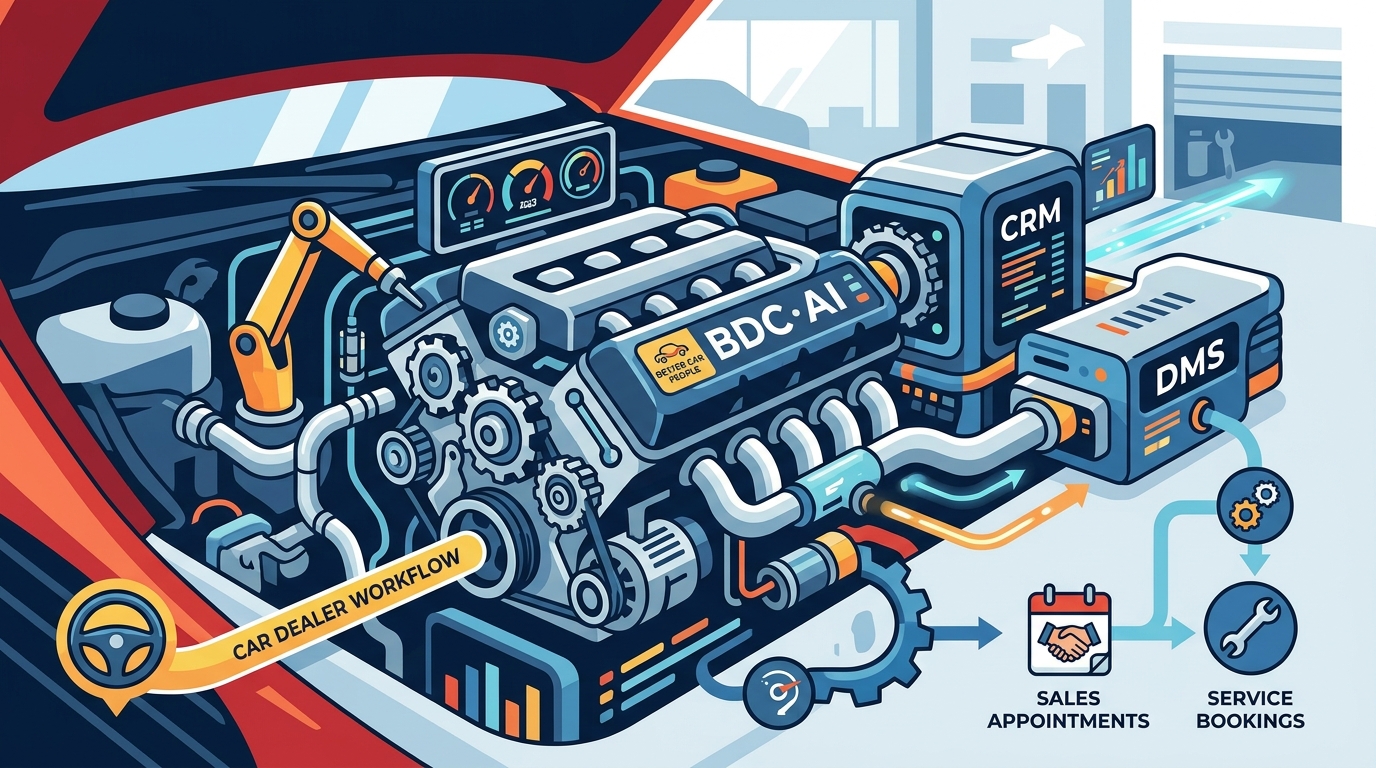
Integration ensures that every interaction is logged in your central database. When a customer texts, chats, or calls, the AI captures the data. It updates the lead status in your CRM automatically. This provides a single source of truth for your sales team. It eliminates the need for manual data entry. It also improves the accuracy of your sales forecasting.
Consider the depth of the integration. Does the platform sync in real-time? Can it push and pull data bidirectionally? Can it trigger workflows based on lead status changes? These capabilities determine how well the AI fits into your daily operations. A robust integration ensures that your team has access to the latest customer information at all times.
BDC Services and Human-AI Collaboration
Business Development Centers (BDCs) remain a vital part of dealership operations. However, the role of the BDC representative is evolving. Modern BDC services combine human expertise with AI assistance. This hybrid approach leverages the speed of AI and the empathy of humans. It ensures that no lead is missed, even outside of business hours.
AI handles the initial response to leads. It qualifies the customer and gathers basic information. It schedules appointments and answers common questions. When a lead requires a more complex conversation, the AI hands it off to a human agent. This seamless transition ensures that the customer feels valued. It also allows your BDC team to focus on closing deals rather than managing traffic.
Compliance and Data Security
Automotive dealerships must comply with strict data privacy regulations. The Gramm-Leach-Bliley Act (GLBA) and the California Consumer Privacy Act (CCPA) impose specific requirements. AI platforms must handle customer data securely. They must obtain proper consent before collecting and using personal information. Non-compliance can result in significant fines and reputational damage.
Compliance is not just a legal requirement. It is also a trust builder. Customers are more likely to engage with a dealership that respects their privacy. A provider that prioritizes compliance helps you build long-term customer relationships. It also reduces the risk of data breaches. This is a critical factor when evaluating any AI or BDC partner.
Evaluating the Right Partner
Choosing the right BDC and AI partner requires careful evaluation. Start by defining your goals. Do you want to increase lead response speed? Improve appointment setting? Enhance customer retention? Your goals will guide your selection process. They will also help you determine the features you need.
Request a demo of the platform. Test the AI with real-world scenarios. Ask how it handles edge cases. Evaluate the quality of the human support. Check the provider's track record in the automotive industry. Look for case studies and testimonials from other dealerships. This will give you insight into the real-world performance of the solution.
Key Takeaways
- Specialized automotive AI platforms outperform generic software in dealer-specific tasks.
- Seamless CRM and DMS integration is essential for data accuracy and workflow efficiency.
- Hybrid BDC services combine AI speed with human empathy for better customer experiences.
- Compliance with data privacy regulations is a non-negotiable requirement for any AI partner.
- Evaluate providers based on their track record, security measures, and total cost of ownership. according to Chapter 37 Section
- Real-time data sync between AI and your DMS prevents missed leads and improves reporting.
- Human-AI collaboration allows BDC teams to focus on high-value interactions.
Frequently Asked Questions
What is a BDC in the automotive industry?
A BDC, or Business Development Center, is a team within a dealership that handles inbound and outbound lead communication. It is responsible for qualifying leads, scheduling appointments, and nurturing customer relationships.
How does AI improve BDC performance?
AI improves BDC performance by handling routine inquiries instantly. It qualifies leads and schedules appointments 24/7. This allows human agents to focus on complex sales conversations and closing deals.
Can AI replace human BDC representatives?
AI cannot fully replace human BDC representatives. It handles initial contact and routine tasks. Humans are needed for complex negotiations, emotional support, and building trust. The best approach is a hybrid model.
What are the key features of an automotive AI platform?
How long does it take to implement an AI BDC solution?
Implementation time varies depending on the complexity of the integration. Simple setups can take a few days. More complex integrations with legacy DMS systems may take several weeks. A dedicated implementation team can speed up the process.
Is AI BDC technology secure?
Yes, reputable providers use encryption and secure data storage. They comply with industry standards and regulations. Always verify the provider's security protocols and data handling practices before signing a contract.
Conclusion
Specialized BDC and AI companies are transforming the automotive industry. They offer tools and services designed specifically for dealerships. By choosing a dedicated partner, you can improve lead response, enhance customer experience, and drive sales. Focus on integration, compliance, and human-AI collaboration. These factors will determine the success of your implementation. Book a meeting with Better Car People to explore how their Collaborative Intelligence approach can elevate your dealership's performance.